
New publication: Parliamentary Culture and Indigenous Traditions of Assembly
Special section in the Transactions of the Royal Historical Society
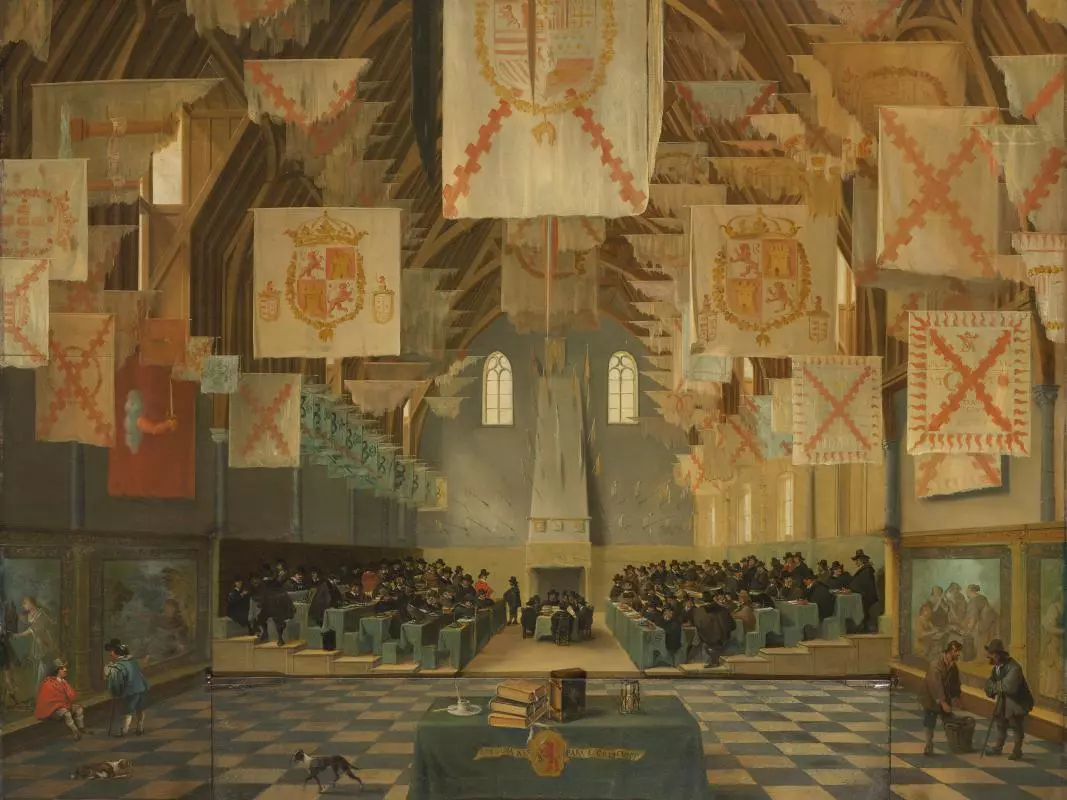
Our special section of Transactions of the Royal Historical Society, edited by Paulina Kewes, Jim van der Meulen, and Paul Seaward, brought together new research on political assemblies during the first centuries of European colonial expansion. Published in July 2025, Parliamentary Culture and Indigenous Traditions of Assembly in the Americas and South and East Asia, c.1500–1700 developed from conversations begun at our workshop on parliamentary culture in colonial contexts held at Jesus College, Oxford, in September 2023.
The special section asks what happens to the history of parliamentary culture when its geographical frame is expanded beyond Europe. By 1500, representative assemblies were well established across many European polities. Yet colonial expansion carried such practices of representation and collective decision-making overseas. This process was not simply a reproduction of metropolitan institutions, however. European settlers encountered Indigenous societies with their own traditions of political gathering, negotiation, and collective decision-making. Our contributors approach colonial assemblies as products and platforms of cross-cultural encounter, characterized by adaptation, conflict, and sometimes mutual appropriation.
Pedro Cardim opens the collection with a wide-ranging study of representative institutions across the Portuguese and Spanish empires. He traces debates over whether colonial communities could hold assemblies of their own or send representatives to metropolitan Cortes, while also examining encounters between Iberian parliamentary practices and Indigenous American, African, and Asian forms of collective decision-making. Rather than a straightforward transplantation of European institutions, Cardim finds interactions and entanglements, shaped by the unequal power relations of colonial rule.
Jim van der Meulen compares three seventeenth-century landdagen, or ‘land days’: in the metropole in Guelders, in New Netherland (North America), and in Dutch Formosa (now Taiwan). Setting a metropolitan assembly alongside two colonial examples shows how a political form rooted in the Low Countries could change as it travelled. In New Netherland and Formosa, Dutch practices interacted both with other European traditions and with Indigenous political cultures, thus producing new forms of assembly that were intended to consolidate the sense of political community in overseas territories (to varying success).
The two remaining contributions begin from individual colonial encounters. Lauren Working reconsiders Virginia’s First General Assembly of 1619 from the perspective of Tsenacommacah, the Powhatan homeland in which Jamestown had been established. Using archaeology, material culture, environmental evidence, and Indigenous knowledge alongside conventional political records, she shows how Algonquian political structures and forms of knowledge remained part of the world in which English representative government took shape. Bruno Miranda, meanwhile, reconstructs the remarkable Potiguara assembly held at Tapesserica in Dutch Brazil in 1645. Its participants debated Indigenous government and freedom and produced a written ‘remonstrance’ for the Dutch authorities. Miranda shows that the assembly cannot be understood simply as a Dutch colonial creation: Potiguara participants drew on their own traditions of collective decision-making while also making strategic use of European political and written forms.
Taken together, the contributions in our special section show that the processes whereby European parliamentary institutions moved from metropole to colony were intricate and complex. The articles show that these political assemblies were translated, contested, and remade in the encounter between different traditions of political representation, while keeping in view the violence, coercion, and inequalities within which these encounters took place. The result is a comparative history of parliamentary culture beyond Europe in which Indigenous political practices form a crucial part of the story.
Find the full special issue here.
Or check out the individual contributions:
Introduction: Parliamentary Culture and Indigenous Traditions of Assembly in the Americas and South and East Asia, c.1500–1700: Comparative Perspectives, by Paulina Kewes, Jim van der Meulen, and Paul Seaward
Representative Institutions and Parliamentary Culture in the Portuguese and Spanish Empires (c. 1500–c. 1700), by Pedro Cardim
Traditions of Assembly in three Dutch ‘Lands’ in the Seventeenth Century, by Jim van der Meulen
The First General Assembly of Virginia: Deerskin, Ruffs and the View from Tsenacommacah, by Lauren Working
Indigenous Alliances in the Dutch–Portuguese Wars in Brazil: Native Petitions and the 1645 Potiguara Assembly, by Bruno Miranda