
The General Assembly of Virginia & Powhatan Tsenacommacah
The first General Assembly of Virginia, the first representative assembly in English America, met in James Fort's timber frame church from 30 July to 4 August 1619, in a region its Powhatan inhabitants called Tsenacommacah.
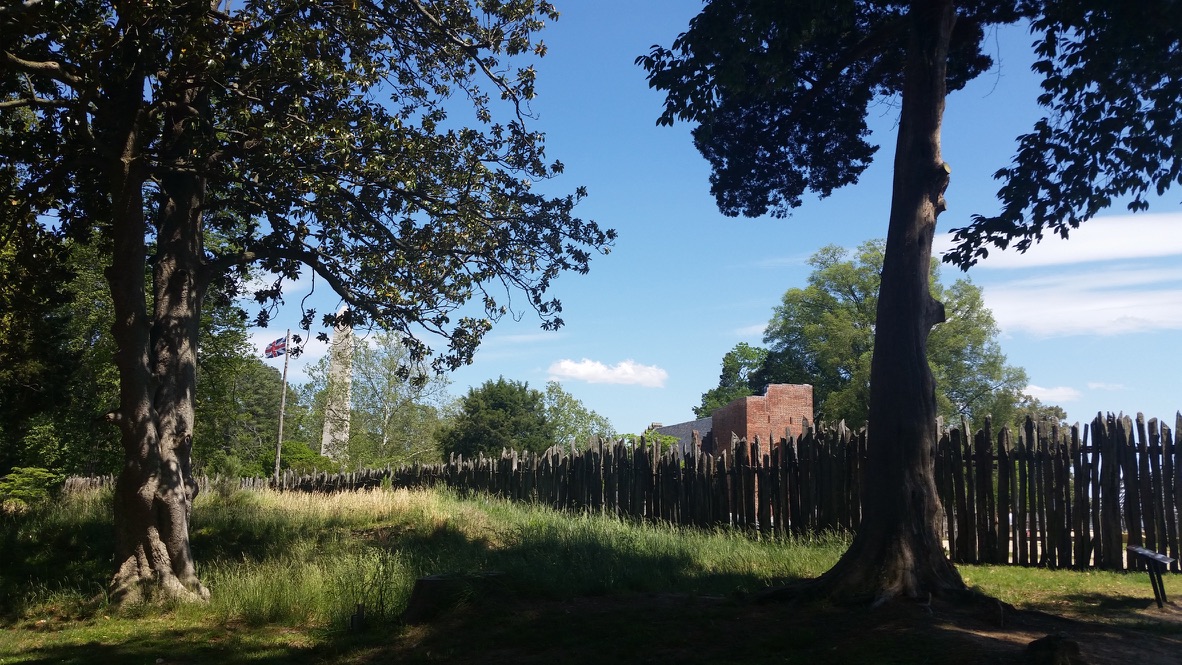
View of the palisades and the surviving church at Jamestown, site of the first General Assembly (Image is author’s).
View of the palisades and the surviving church at Jamestown, site of the first General Assembly (Image is author’s).
Until this point, ad-hoc councils met on board ships or in gentlemen's dwellings; from 1609 to 1612, colonists had been ruled by martial law. It was after the MP Edwin Sandys' parliamentary faction wrested control of the Virginia Company in 1619 that the company charged its newly-elected governor, George Yeardley, with establishing the assembly, underpinned by a ‘great charter of privileges, orders, and laws' that became ‘the first experience of a plantation with a written constitution' (Narratives of Early Virginia, 1606 – 1625, p. 247). The assembly, as John Smith reported, was ‘allowed by the state in England, in the nature of a Parliament', conferring a renewed sense of legitimacy to the colonial project by emphasizing its close ties to London (Smith, The generall historie, p. 193). Meeting in Jamestown church was a matter of convenience, but opening with the Jacobean Oath of Supremacy and a prayer led by the chaplain Richard Buck also reinforced the relationship between Protestant orthodoxy and political authority.
Those who assembled met as a single body, consisting of the governor Yeardley, his four councillors, and 22 elected burgesses. Over the course of five days, council members discussed commerce, regulating moral behaviour, religious affairs, inheritance rights, the transport of servants from England, social deviance, Anglo-Powhatan relations, and raising funds to build a church for Indigenous children. The assembly met with instructions to ‘establish one equal and uniform government over all Virginia' and introduce ‘just Laws for the happy guiding and governing of the people there inhabiting' (‘Proceedings', p. 254). The first assembly's secretary was John Pory, who had served in Parliament and travelled to Europe and the Ottoman Empire. Pory's letters to friends in London indicate his sense of the significance of the assembly to the stability of the colony. ‘I am, for faulte of a better, Secretary of Estate', he wrote, ‘the first that ever was chosen and appointed' (Letter of John Pory to Dudley Carleton in Narratives, p. 285).
While the first General Assembly has often been given an outsized importance in the history of English colonialism and the beginnings of democracy in the United States, the assembly did play an important role in colonial governance and regulation. From 1619 until 1643, the elected burgesses, many of them connected to gentry and aristocratic families in England, met in a unicameral body, presided over by the governor and council. Two burgesses represented the colony's counties, just as two representatives were elected to the House of Commons from each English county. In 1619, the assembly contained 22 elected representatives; ten years later, that number had more than doubled, reflecting the colony's rapidly expanding settlements. Though burgesses were initially elected by the colony's free, white landholders and tenant farmers, by 1670, only white landowners could elect representatives.
Burgesses carried out responsibilities that were similar to those of Members of Parliament in England, though the conditions and practicalities of governance in Virginia were vastly different. Royally-appointed governors, meanwhile, were the direct representatives of English monarchs, exercising a range of legislative, military, and judicial responsibilities. Connections to Crown and Parliament fluctuated over the seventeenth century. Shortly after the arrival of the courtier, adventurer, and playwright William Berkeley as governor in 1642, the assembly became a bicameral legislature with ‘an impressive array of parliamentary powers', becoming ‘the wellspring of sovereignty in Virginia' (Billings, A Little Parliament, p. 39). By Bacon's Rebellion, the 1676–1677 uprising led by Nathaniel Bacon against Berkeley, royal administration increasingly sought to impose stricter Crown control, and the House of Burgesses' powers began to diminish.
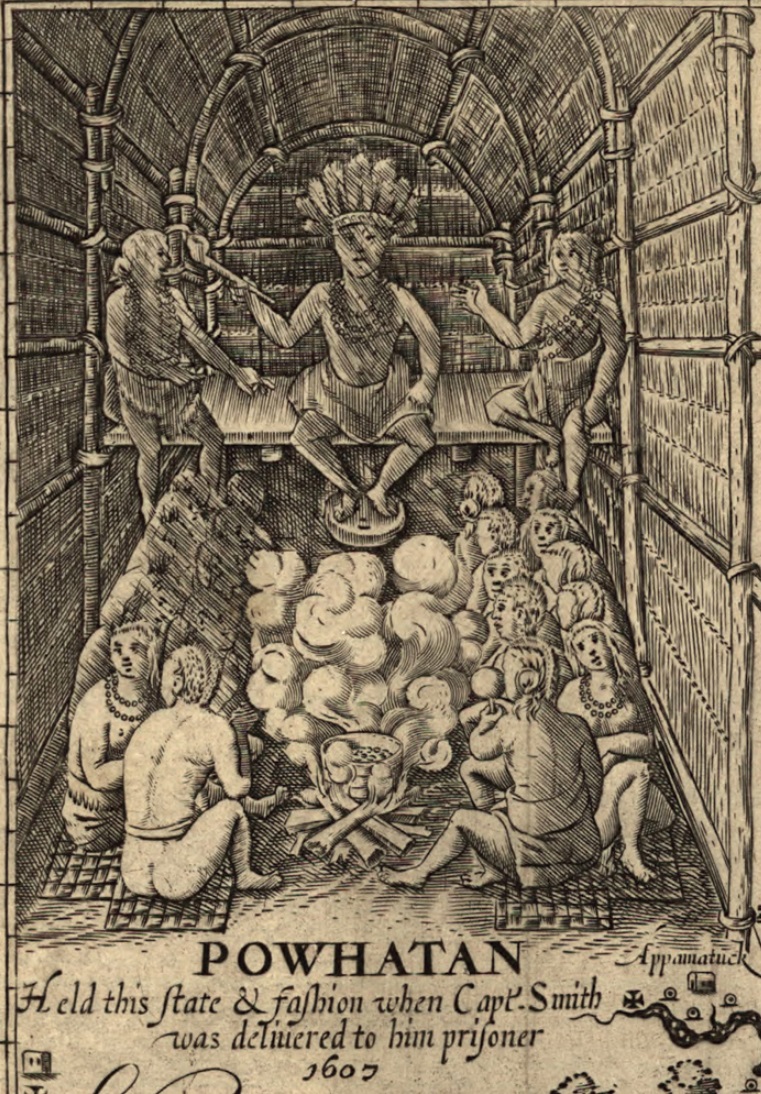
A place of multiple assemblies: detail of Wahunsenacah [Powhatan] from John Smith, 'The General History of Virginia, Bermuda, and the Summer Isles' (1624), which also recorded the first meeting of the General Assembly (Wikimedia Commons).
A place of multiple assemblies: detail of Wahunsenacah [Powhatan] from John Smith, 'The General History of Virginia, Bermuda, and the Summer Isles' (1624), which also recorded the first meeting of the General Assembly (Wikimedia Commons).
As Aaron Graham writes of the House Assembly of Jamaica, Virginia's General Assembly was modelled on the English Parliament while acquiring a significantly different character based on the particularities of place. Throughout this period, the assembly's deliberations took place on Indigenous homelands in the Chesapeake, where Algonquian rulers met with their shamans and other trusted advisors to make political decisions on their own terms. While white landowning gentlemen sought to recreate the culture of Parliament they knew from England, in other words, their attempts operated alongside other assemblies and assertions of political sovereignty made by the region's many thriving and powerful Algonquian groups. These connections can be seen in the material culture from the fort that survived from the 1610s and beyond. When the assembly met in Jamestown's wooden church, all the recognisable materials of English political culture – ink, paper, records kept in carefully-guarded wooden chests – existed alongside roanoke beads, pumpkin seeds, and tobacco pipes, evidence of the pervasive Indigenous presence that saturated and affected colonial decision-making. Archaeologists at Jamestown have uncovered several hundred keys that date to this period, related to the chests and coffers that contained personal items as well as state documents and political intelligence. The many asqweowan (arrows) found in the colony may suggest signs of conflict, but also trade relations and hospitality, from the presence of gift arrows carved from rare materials such as jasper and quartz crystall, to the use of arrows to hunt food that might be shared in meals.
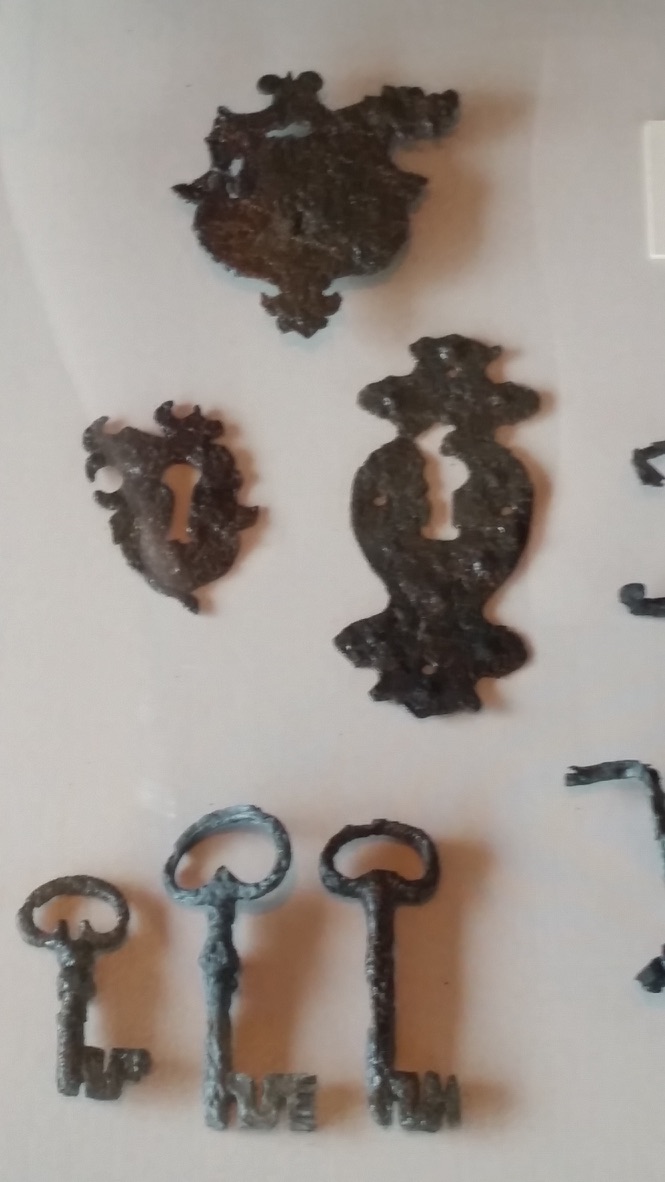
Some of the escutcheons and keys on display at Historic Jamestowne
Some of the escutcheons and keys on display at Historic Jamestowne
In addition to Indigenous material culture in assembly debates, and the influence of Anglo-Indigenous encounters on colonial law-making, assembly culture quickly became entangled with exploitative plantation labour and slavery with the rise of a tobacco economy. From the first meeting, assembly members including Pory complained about idle servants and the need for greater labour forces from England. In a letter to Edwin Sandys about the proceedings in the weeks following the first assembly, the planter John Rolfe, also known as husband to Matoaka/Pocahontas, reported that Yeardley had acquired some 20 Africans for the colony. The Africans, likely from Angola, had been taken from English privateers from a Spanish ship. In 1625, eight of these Africans lived on Yeardley's plantation on Jamestown Island. One of the women, known only as Angela, lived in the household of William Pierce, where she helped cultivate and gather fruit. The council's expectation that planters run trials to diversify crops depended on the labour and knowledge of both free and enslaved women, even if such women were not afforded a public voice in official gatherings. In the second half of the seventeenth century, assembly members played active roles in codifying slavery, so that by 1705, ‘colonial law regarded slavery as the permanent condition of most African Virginians' (Billings, A Little Parliament, p. 207).
Although women were not official members of the assembly, white women had long been considered essential to colonial stability and to the establishment of the patriarchal household abroad. A petition presented in the assembly acknowledged that ‘in a newe plantation it is not knowen whether man or woman be more necessary' (‘Proceedings', p. 258). Colonists who spent time in Indigenous villages noted that Native women were present at Powhatan assemblies, serving as important mediators and advisors, and, at least by the later seventeenth century, as werowansqua (female chiefs). Lady Berkeley (Frances Culpepper Berkeley) participated in factional politics of the 1670s, rallying her late husband's supporters to resist the English metropole's attempts to curb colonists' freedoms and powers.
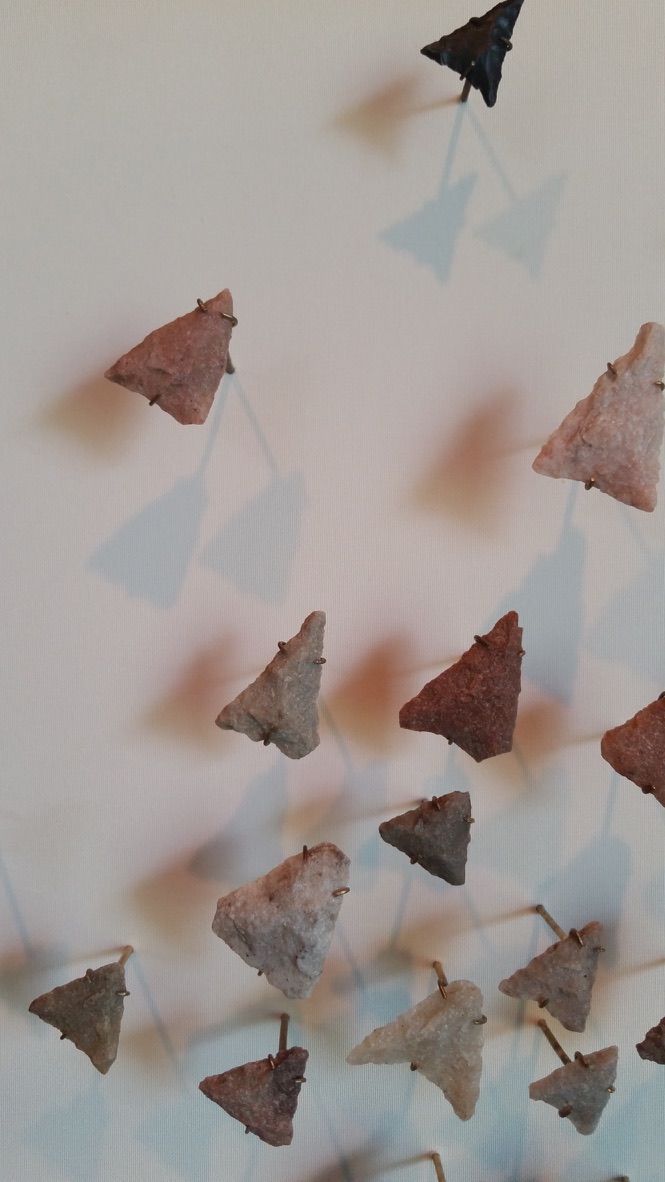
An assortment of Algonquian arrows on display at Historic Jamestowne
An assortment of Algonquian arrows on display at Historic Jamestowne
As the first representative assembly in the English colonies, the General Assembly both contained clear connections to Parliament at home, and offers evidence of colonists' growing desire for autonomy and self-regulation. Throughout the early modern period, the assembly largely operated in the interests of the wealthy planter families who dominated colonial politics in the Chesapeake. Nonetheless, the assemblies and political cultures of the region were varied and multilayered. The woodlands, cornfields, swamplands, and coastlines to which the English laid claim were sites of political and sacred importance to the dozens of Algonquian groups that populated the area, and the General Assembly carved out its powers and decrees ever alongside Indigenous assemblies and political decision-making.
Dr Lauren Woking,
University of York
Further Reading:
Warren Billings, A Little Parliament: The Virginia General Assembly in the Seventeenth Century (Richmond: Library of Virginia, 2004).
Christine M. DeLucia, Memory Lands: King Philip's War and the Place of Violence in the Northeast (New Haven, 2018),
Alexander Haskell, For God, King, and People: Forging Commonwealth Bonds in Renaissance Virginia (Chapel Hill: University of North Carolina Press, 2017).
Narratives of Early Virginia, 1606 – 1625, ed. Lyon Gardiner Tyler (New York: Charles Scribner, 1907).
Hayley Negrin, ‘Return to the Yeokanta/River: Powhatan Women and Environmental Treaty Making in Early America', Environmental History, 28:3 (2023), pp. 522-53.
L. Chardé Reid, ‘“It's Not About Us”: Exploring White-Public Heritage Space, Community, and Commemoration on Jamestown Island, Virginia', International Journal of Historical Archaeology, 26 (2022), 22-52.
Records of the Virginia Company, 1606–1626, Vol. III, ed. Susan Myra Kingsbury (Washington, DC, 1933).
John Smith, The generall historie of Virginia, New-England, and the Summer Isles (1624; STC 22790).
Virginia 1619: Slavery and Freedom in the Making of English America, ed. Jim Horn, Peter Mancall, and Paul Musselwhite (University of North Carolina Press, 2019).
Lauren Working, The Making of an Imperial Polity: Civility and America in the Jacobean Metropolis (Cambridge: Cambridge University Press, 2020).