
Venice’s Republican Councils: Great Council, Senate, Collegio and Council of Ten
Venice's institutions can be divided into officia or offices – officers, executors, procurators, all executive offices – and consilia or councils. The latter ranged from from few to several thousand members. They deliberated and voted on all home and foreign affairs – and elected all officia. In the capital, a city that by 1600 reached nearly 200,000 inhabitants, they decided even the minutest aspects of urban administration. In the rest of the state – stretching from Northern Italy to the Eastern Mediterranean and including some six million subjects – they left strictly local affairs to yet more provincial assemblies, but elected and instructed governors and decided on all fiscal and defence policies. Like Parliament in England, they combined judicial with legislative powers, but also had a degree of executive powers, especially the smaller councils such as the Council of Ten (which in fact had 17 members). Unlike in England, there was never any discussion of their ‘prerogative', essentially because every possible political decision belonged to these councils. Unsurprisingly, some were extremely busy, meeting almost daily as permanent institutions in the Ducal Palace. Conciliar activity was literally part of everyday life for the many hundreds of patricians who were members of one or the other of these councils (and often, of more than one).
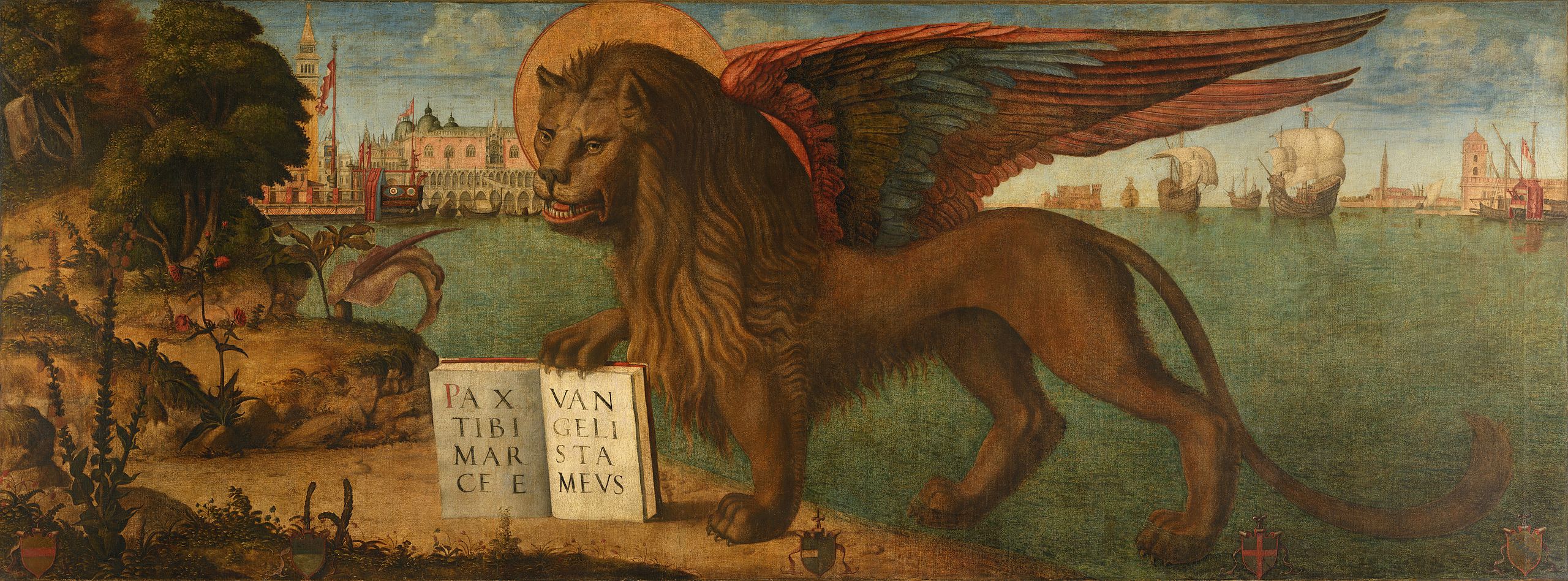
Vittore Carpaccio, Lion of St Mark, c. 1516. Wikipedia Commons. On the left is the Ducal Palace or Palace of St Mark, where the painting is still hanging. By far the city’s largest, its layout is a useful guide to the working and mutual relations to this day; it housed the doge in a small suite of rooms but above all hosted the numerous councils of the Republic.
Leone marciano andante vittore carpaccio google cultural institute
Venetian patricians were members of the Great Council (Maggior Consiglio) by right of birth – they descended from the families who were represented in the Council at the time of its famous closing in 1297. As such, Venice is known as an aristocratic, or better oligarchic republic, and patricians were a minority of the population. But they were a large minority, oscillating between 1500 and 2500 men in the early modern period. Comparisons would be useful, but this must have been one of the largest, if not the largest, group of people consistently engaging in government business in the late medieval and early modern world.
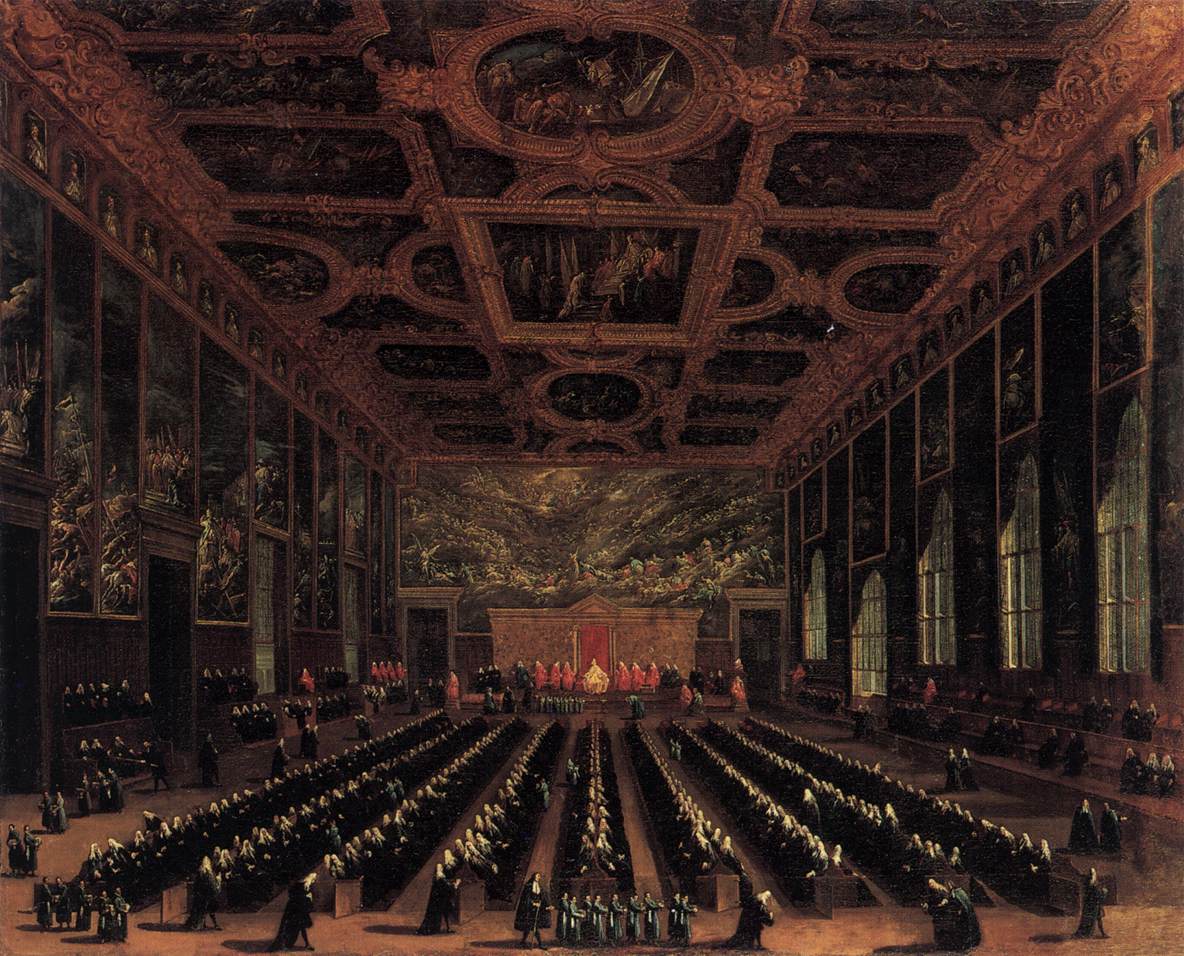
Antonio Diziani, 'The Great Council in Session', Wikimedia Commons. The council gathered the entire body of the patriciate and met every Sunday; it elected most other officers and councillors in Venice. Note the identical robes, a uniform that was supposed to hide social and economic differences; the only exceptions were specially appointed officers. The children in the foreground carried the urns used to vote: their age was intended as a guarantee of innocence.
Antonio Diziani, 'The Great Council in Session', Wikimedia Commons. The council gathered the entire body of the patriciate and met every Sunday; it elected most other officers and councillors in Venice. Note the identical robes, a uniform that was supposed to hide social and economic differences; the only exceptions were specially appointed officers. The children in the foreground carried the urns used to vote: their age was intended as a guarantee of innocence.
Patrician culture was thus at once republican and oligarchic. Republican, because all patricians were equals and in council each vote counted as much as the next. Sumptuary legislation ensured a degree of uniformity even in appearance, and strict legislation sought to prevent individuals from exerting undue influence. For example, rotation prevented officers – and also some categories of council members – from maintaining their functions for more than a certain time. On the whole, greater power corresponded to shorter tenure. And yet this was an aristocratic oligarchy. As the word suggests, ‘patricians' only included males only, even though women and adolescents had substantial informal power in building and maintaining kin networks and horizontal alliances between families. And of course, the patriciate excluded most of the rest of the population. Elsewhere in Europe, civic assemblies included representatives of guilds; not so in Venice, where manual professions disqualified from patrician status – unsurprisingly in this great commercial capital, trade did not. Aristocratic ideology justified political arrangements in terms of patrician selflessness, public devotion, wisdom and increasingly from the late fifteenth century, birth and magnificence.
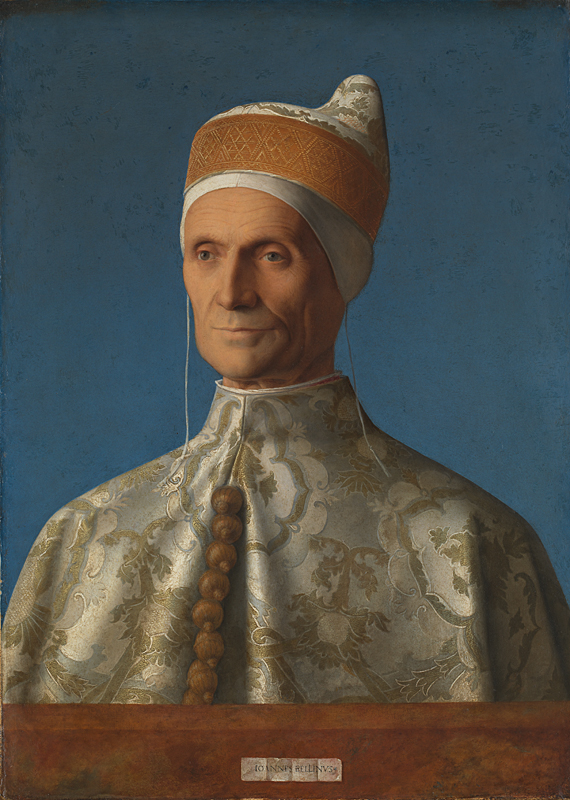
Giovanni Bellini, Doge Leonardo Loredan, c. 1502, National Gallery, London. Wikimedia Commons. Recalling a marble bust (in the style of Roman emperors), this portrait of richly attired doge Leonardo Loredan points to the double nature of the office: a selfless representative, yet an imposing, and intense, figure: ‘lifelike and immediate as well as distant and imposing’.
Giovanni Bellini, Doge Leonardo Loredan, c. 1502, National Gallery, London. Wikimedia Commons. Recalling a marble bust (in the style of Roman emperors), this portrait of richly attired doge Leonardo Loredan points to the double nature of the office: a selfless representative, yet an imposing, and intense, figure: ‘lifelike and immediate as well as distant and imposing’.
‘Oligarchic republic' may seem an oxymoron today but made sense at the time to those who saw it as vital to Venice's success. Fanciful chronicles boasted the city's foundation as 421AD and everybody knew that Venice survived the wars and factional conflict that toppled most other Italian medieval republics. Many credited Venice's exceptional resilience to conciliar arrangements. Some praised equality, like Marino Sanudo (1466-1536), a patrician who never obtained high office and boasted that no individual exercised excessive power. He believed that conciliar debate ensured the best decision and for this reason insisted on the importance of political participation. Others emphasised balance and exclusivity. Other patricians, like the much grander Gasparo Contarini (1483-1542), followed earlier humanists like Pier Paolo Vergerio to hail Venice as the best example of mixed government, a prized ideal since Plato and Aristotle. The democratic element was the Great Council, which gathered all male patricians aged 25 or above (as well as some lucky eighteen-year-olds selected at random every year.) Contarini called them simply cives, citizens: a term which exalted the civic spirit of patricians while disenfranchising the rest of the population. The monarchical element was the ‘doge': from the Latin dux but less military leader than representative head. He was elected by the Great Council for life but usually in old age. The Great Council also elected many other offices and councils including the Senate, which made the aristocratic element. Contemporaries like Contarini celebrated the balance of these elements which ensured peace and harmony – hence the famous title Serenissima. Of course in practice there were clashes, but they were rarely if ever mentioned in political treatises. What made Venice exceptional in their eyes, was not that it was a republic but that it was peaceful despite being a republic. The cherished image of ‘the most serene republic' was the true oxymoron, held proudly as an emblem.
The Senate included some 250 members, including 120 who could be confirmed year after year so as to allow some continuity in expertise; the rest obtained membership ex officio, by virtue of other offices to which too they had been elected. The Senate never lost its functions as a deliberative assembly and continued to be the closest in function and activity to a sitting parliament. By contrast to the Great Council, which voted in silence, senators debated all major decisions and so really represented the differing opinions that naturally existed in the patriciate. This made for an interesting paradox. On the one hand, debating was a crucial skill for Venetian patricians, and deliberative rhetoric, a tool of political life. On the other, strict rules regulated debating so it would not unsettle the order of government or the power of those who set the day's agenda; and even stricter secrecy maintained a façade of unanimity. Thus, secretaries recorded the audiences of foreign ambassadors verbatim, but took no minutes of the arguments voiced inside the Senate and in fact senators themselves were forbidden from bringing pen and paper into the hall. Such procedural rules mattered.
A half century ago, John Pocock underlined the importance of Venetian electoral arrangements in influencing modern republicanism as a system of ‘mechanized virtue' intended to ensure that the common good triumphed over individual ambitions. But as I suggested in my book, Information and Communication in Venice, the preservation of secrecy had similarly important ideological functions, despite the infamous traits it acquired in nineteenth-century Romantic portrayals such as Lord Byron's Marino Faliero. On the one hand it rendered groupings and factions less visible and influential, while in fact pushing them behind the scenes. On the other, it was meant to protect voting, the only form in which most patricians exercised their sovereign power free from outside pressures. Ballots were made of cloth, so that even in densely packed assembly halls no one could hear in which urn they had been deposed. In Venice, secrecy enabled a remarkable achievement: a government unique for its large power-sharing and complex deliberative process being renowned above all for its secrecy and harmony. But beyond Venice, a comparative analysis of such arrangements in European parliamentary institutions as researched in the Parliamentary Cultures Project would illuminate differences and similarities in social and political assumptions.
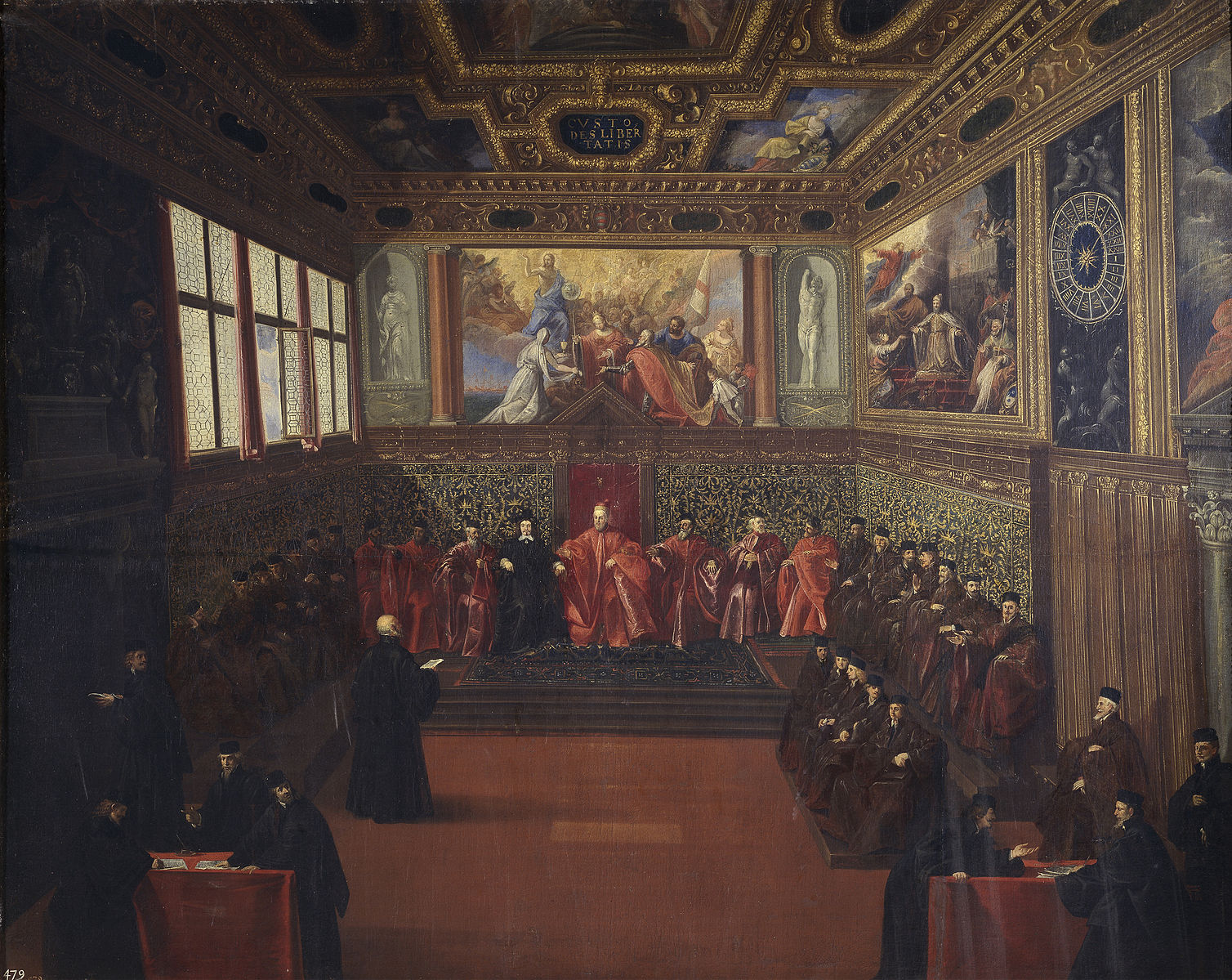
Pietro Malombra, 'Audience of the Spanish ambassador in the hall of the Collegio' c. 1617, Museo del Prado. Wikimedia Commons. El Prado Muse Ambassadors were received in the Collegio, where the doge sat surrounded by his counsellors; they addressed him as the representative head of the state, but all substantial answers and decisions were taken by the Senate, for which the Collegio worked as a steering cabinet – the door to the right connects their two halls.
Pietro Malombra, 'Audience of the Spanish ambassador in the hall of the Collegio' c. 1617, Museo del Prado. Wikimedia Commons. El Prado Muse Ambassadors were received in the Collegio, where the doge sat surrounded by his counsellors; they addressed him as the representative head of the state, but all substantial answers and decisions were taken by the Senate, for which the Collegio worked as a steering cabinet – the door to the right connects their two halls.
Three other points enrich the history of Venice's republican councils in important ways. First, despite all these arrangements, an oligarchy within the oligarchy held an inordinate amount of power not because of experience or wisdom, but thanks to patron-client networks and wealth. Electoral rolls show that a relatively small number of individuals and families in every generation effectively monopolised the Ten and other powerful councils, to which they were returned time and again. Second, thse smaller councils dominated the agenda of larger ones. So for example the Collegio – which, as in this picture, also received foreign ambassadors and representatives of subject communities sent from the rest of the state – dominated the Senate, dictated the subject of debates, and acted as a central government body. The Council of Ten was instituted in 1310 in the wake of a thwarted conspiracy, as a sort of public safety committee, but remained in charge of state security and increased its powers until the end of the Republic in 1797. Third, this ‘inner core' did not go unchallenged. There were regular rebellions in larger patrician councils, the most famous in 1582 and 1628, when the Great Council passed motions severely restricting the power of the Ten. These and other occasions would require greater study, but what is certain is that political conflict – downplayed in the official façade but constant in reality – undermined secrecy. Fourth, conflict extended beyond parliamentary institutions. Patricians, secretaries and other professionals of information continued to discuss and negotiate politics far beyond the halls of government in what in my book I call a ‘competitive political arena' outside institutions. And what's more, ordinary Venetians as well as foreigners had a keen interest in precious government information, for trade or profit or sheer curiosity – people even placed bets on the outcome of patrician elections.
This curiosity is not the negation but a constituent element of Venetian politics. Indeed, a final point that is worth mentioning is that Venice's constitutional arrangements were the subject of vibrant and sustained discussions, including powerful transnational echoes. In fact, the ideals of Venice were themselves to some extent elaborated by foreign visitors like, a generation before Contarini, the French ambassador Philippe de Commynes (1445-1511). Contarini's text was first printed in Paris after the author's death; in Lewis Lewkenor's 1599 translation, it became a classic in English political literature. Between the sixteenth and the seventeenth century many authors in both the Netherlands and Poland also looked to Venice as a model, largely on the basis of notions brought back home by well-connected travellers who (for example) were allowed to glimpse at the silent voting procedures in the Great Council, which they described as a spectacle of majesty. One such traveller was James Harrington. In Oceana (1656) he observed that Venice owed her ‘steadiness' to its capacity to silence disagreement, something which the English Commonwealth failed to do. His description suggests that he actually attended a session of the Great Council. Whether we would call this kind of silent debating a form of parliamentary politics is another question, and there certainly were many critics of Venice at the time already – but there is no doubt that Venetian councils had powerful significance for observers throughout Europe.
Filippo de Vivo,
St Edmund Hall, Oxford
Primary sources published in English, in chronological order:
Pier Paolo Vergerio, ‘De Republica Veneta', translated by R. G. Witt in J. Kraye ed., Cambridge Translations of Renaissance Philosophical Texts, vol. 2 (Cambridge, 1997), pp. 117 27.
Marin Sanudo's Diaries, extracts from Patricia H. Labalme and Laura Sanguineti White (eds.), Venice, cità excelentissima: Selections from the Renaissance Diaries of Marin Sanudo (Baltimore, 2008)
Gasparo Contarini, The Commonwealth and Government of Venice, first published 1543, trans. L. Lewkenor (1599; facsimile repr., Amsterdam and New York, 1969) (online)
James Harrington, The Common-Wealth of Oceana (London, 1656)
Secondary literature:
Besta, Enrico. Il Senato Veneziano. Venice, 1899.
Chojnacki, Stanley. Women and Men in Renaissance Venice : Twelve Essays on Patrician Society. Baltimore ; London: Johns Hopkins UP, 2000. Print.
Cozzi, Gaetano. Repubblica Di Venezia E Stati Italiani : Politica E Giustizia Dal Secolo XVI Al Secolo XVIII. Torino: G. Einaudi, 1982.
De Vivo, Filippo. Information and Communication in Venice [electronic Resource] : Rethinking Early Modern Politics. Oxford: Oxford UP, 2007. Oxford Scholarship Online. Web.
Fasoli, G. (1958). Nascita di un mito. Studi storici in onore di Gioacchino Volpe. Firenze, Sansoni. 1: 445-479.
Finlay, Robert. Politics in Renaissance Venice. New Brunswick, N.J.: Rutgers UP, 1980. Print.
Gelder, Maartje van "The People's Prince: Popular Politics in Early Modern Venice." The Journal of Modern History 90.2 (2018): 249-91. Web.
Grendler, P. F. ‘The Leaders of the Venetian State, 1540-1609: A Prosopographical Analysis', Studi veneziani 19 (1990): 35-85.
Hurlburt, Holly S. The Dogaressa of Venice, 1200-1500 : Wife and Icon. New York ; Basingstoke: Palgrave Macmillan, 2006. Print. New Middle Ages (Palgrave Macmillan (Firm)).
Lowry, M., “The Reform of the Council of Ten in 1582-3: an unsettled problem?”, Studi Veneziani, v.13 (1971): 275-310.
Maranini, Giuseppe. La Costituzione Di Venezia Dopo La Serrata Del Maggio Consiglio. Venezia: La Nuova Italia, 1931. Print.
Romano, Dennis. The Likeness of Venice : A Life of Doge Francesco Foscari. New Haven, Conn. ; London: Yale UP, 2007. Print.