
Maryland General Assembly
As one of the smallest of England's North American colonies, Maryland would seem to be among the most obscure sites of representative government in the early modern world. However, the unique circumstances of the colony's founding, as a private proprietorship granted to a Catholic noble family at the outset of fifty years of politico-religious upheaval across the British world, made the Maryland General Assembly an especially contentious institution. While many English/British colonial legislatures matured gradually through a pragmatic process of creolization, the Maryland legislature was repeatedly restructured, rehoused, and even re-founded. It wrestled with some of the core constitutional questions of the era without many of the guardrails of tradition and vested interest that shaped European conflicts, and without the quick wealth or cultural homogeneity that helped rapidly anchor colonial elites elsewhere in the Atlantic world.
'Nova Terra Mariae Tabula' (1635) – This first printed map of Maryland was intended by Lord Baltimore to attract settlers to the newly established colony. It prominently displays the arms of the Baltimore family in addition to the royal insignia (John Carter Brown library)
'Nova Terra Mariae Tabula' (1635) – This first printed map of Maryland was intended by Lord Baltimore to attract settlers to the newly established colony. It prominently displays the arms of the Baltimore family in addition to the royal insignia (John Carter Brown library)
Maryland's unique legislative development was shaped by two main factors. The first was constitutional. The colony was created by a 1632 charter issued by Charles I to Cecil Calvert, 2nd Lord Baltimore, giving him exceptionally wide-ranging control over the land, trade, and governance of the northern half of the Chesapeake Bay, which had previously lain within the bounds of the royal colony of Virginia. This pattern for colonial expansion, termed ‘proprietorship,' was an innovation of the Caroline court that posed critical new questions about the nature and purpose of representative government. The previous corporate structure for English expansion, employed in colonizing Virginia and elsewhere, had carried with it assumed and delineated requirements for collective governance of the corporation, both in the company's ‘court' in London and eventually its General Assembly in Virginia. These would go on to shape the courts of other corporate colonies, such as Massachusetts. However, the corporate framework, particularly as it was applied in Virginia, became unpopular with the crown during the early 1620s because of fears that it granted too much self-government.
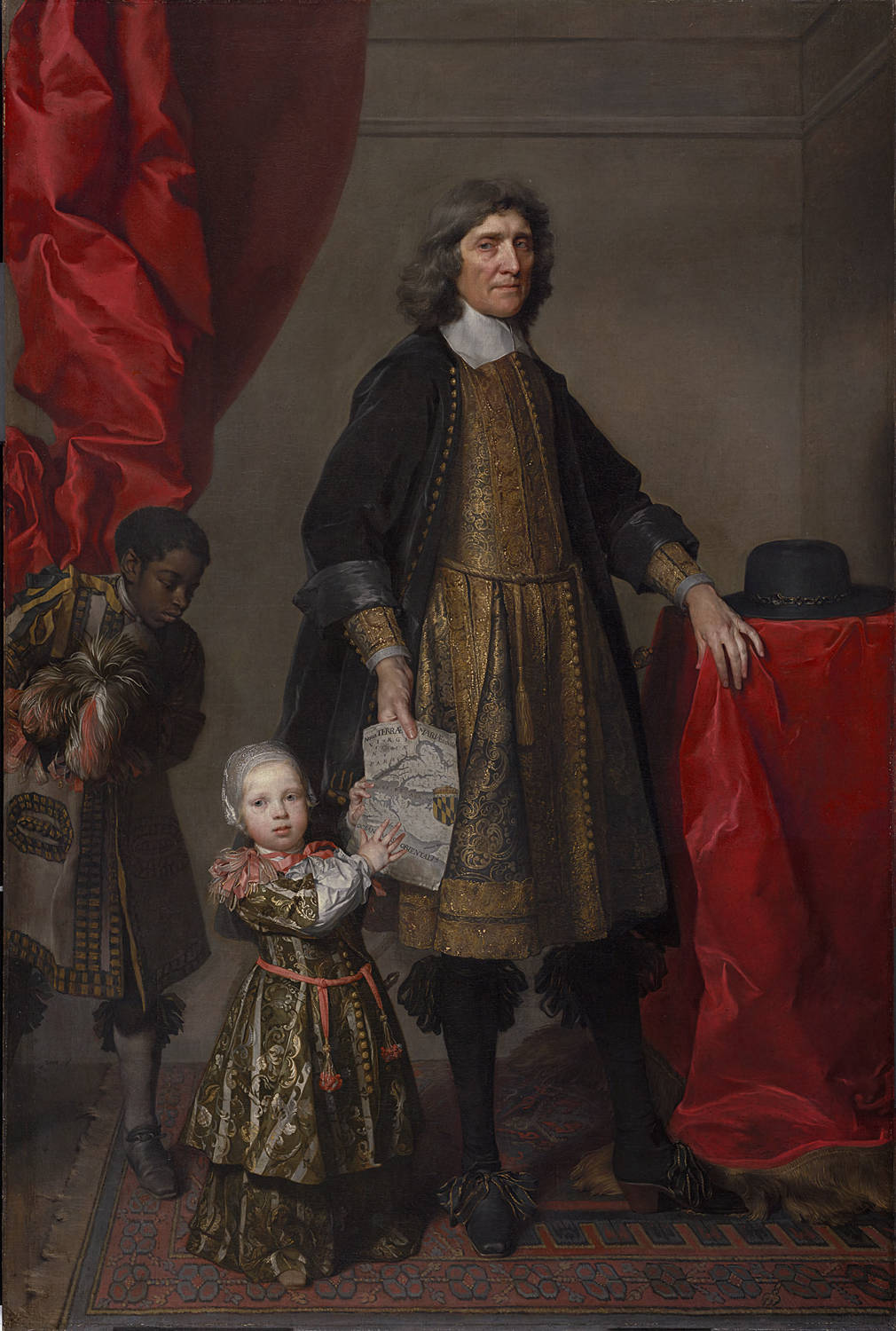
Cecil Calvert, 2nd Lord Baltimore (ca. 1670) – Cecil Calvert was the primary architect of the Maryland colony and its governing structure. His promotional map (above) can be seen depicted in his hand in this portrait (Pratt Library, Baltimore)
Cecil Calvert, 2nd Lord Baltimore (ca. 1670) – Cecil Calvert was the primary architect of the Maryland colony and its governing structure. His promotional map (above) can be seen depicted in his hand in this portrait (Pratt Library, Baltimore)
Proprietorship was a direct response to these critiques. The proprietary model was fine-tuned in the 1620s through grants made for abortive colonies in Newfoundland and Carolina, and an ambitious and unenforceable proprietorship of the whole Caribbean, before being extended to Cecil Calvert in 1632. It also clearly drew from the same ideas about absolute royal authority that would lead Charles I to soon embark upon his experiment of ‘Personal Rule' without Parliament in England. The Maryland charter stated that Calvert could legislate on a broad range of issues with only the ‘advice, assent, and approbation' of the free-men of the colony and that this could be gained in whatever form ‘shall seem best to him.' It was in Maryland that proprietorship's intentions were most fully realized, because Calvert dispatched members of his own family to govern the colony and make his personal authority more tangible, and his son, the 3rd Lord Baltimore, eventually took up personal residence in the Chesapeake. Maryland's General Assembly, therefore, developed under the watchful and suspicious eye of the closest thing English America ever got to a resident monarch.
The second crucial factor in the legislature's development was confessional. Dramatically adding to Maryland's proprietary peculiarity was the fact that the Calvert family had converted to Catholicism during the 1620s, at a moment when English colonial expansion was being heavily influenced by anti-Spanish and anti-Catholic sentiments. George Calvert, 1st Lord Baltimore, had refused to swear the Protestant oath of allegiance to the crown, withdrawn from court, and developed plans to pursue a colonial venture (initially in Newfoundland). He ultimately bequeathed these aspirations and plans to his son. Scholars differ on whether the creation of an English Catholic refuge was Cecil Calvert's primary motive in establishing Maryland, but it is unquestionable that he hoped to recruit both Catholic and Protestant colonists and construct a system in which they could live openly together. This may not have been far removed from the early Stuart monarchy's ecumenical aspirations, but it was anathema to many English Protestants who fundamentally questioned the loyalty of any Catholic to the crown. Building a representative legislature in these circumstances, therefore, required addressing the fundamental question of whether Catholic colonists could participate in governance if their loyalty to the entire English colonial project was suspect.
It was not immediately clear, though, what form of assembly Maryland would even have. The proprietary charter had given Lord Baltimore broad license to design (and also redesign indefinitely) the political structure of colonial society, and he took it. He planned a manorial system of hierarchical land grants with (mostly Catholic) landlords and a system of ‘hundreds' modelled on the village-level organization of rural England. When his brother, Leonard Calvert, who served as governor, gathered the roughly one hundred freeholders who arrived in the initial wave of colonists in 1634 to draft a law code, the resulting document was promptly vetoed by Baltimore with a stern reminder that only he could determine what constituted ‘assent.' Four years later the proprietor finally sanctioned a gathering of all the free male population, which was still a tiny number (with individuals nominated personal proxies if they could not attend), but Leonard Calvert quickly dissolved the body again when the members began to propose amendments to the law code Baltimore had sent purely to be ratified.
Subsequent meetings of the Assembly through the 1640s and 1650s consisted of prominent individuals summoned directly by the proprietor, and representatives elected by the approximately five to ten freeholders in each hundred. The individuals summoned by name eventually became known as the ‘council' when they sat with the governor on executive matters and as the ‘upper house,' when they sat as part of the legislature. Delegates began to claim Parliamentary privileges, such as freedom from arrest during legislative sessions, but the gatherings lacked any of the constitutional and common law foundations of assemblies elsewhere in the Anglophone world. No foundational legal framework that formally acknowledged Baltimore's charter rights was passed, and much of the legislation that was passed ended with a proprietary veto. Baltimore also demanded that almost all legislation that was passed have a strictly limited lifespan, requiring that it be reinstituted every few years and giving him the ability to amend or veto it each time. Assembly meetings were extremely tense, with opposition from both the leading Catholic landowners who felt they were being compelled to place loyalty to the proprietor above the rights of the Church, and also from Protestants suspicious of any form of Catholic authority. The Assembly's rights, and its very existence, therefore, remained contingent for decades.
The General Assembly remained a remarkably malleable institution, partly by accident and partly by design. The Calvert families' Catholicism put them in the crosshairs of puritan and Parliamentary factions as the British Isles descended into war during the 1640s. Although he worked carefully to preserve his neutrality through the conflicts, religious ideologs inevitably questioned Baltimore's loyalty to the English state as it became dominated by radical Protestants, and opportunist colonists and merchants who resented the proprietor's authority over trade, land grants, and relations with Indigenous nations also seized upon the issue of loyalty to try to undermine his authority with the Parliamentary side in England. This fundamentally weakened Baltimore's ability to legitimize the Assembly. The events of 1645-6 were indicative of this weakness. A Protestant mariner, Richard Ingle, who had been arrested in Maryland for treasonous comments against the King but had managed to escape, returned to the colony in 1645 to kickstart a widespread rebellion of the Protestant servant class that decimated most of the established landed estates and destroyed functioning government. A Virginia colonist, Edward Hill, arrived the following year and took effective control, calling an Assembly without any formal authority to do so. When Leonard Calvert returned later that year he initially had to work with this alternatively founded Assembly before fully reasserting proprietary authority. It was clear that the chaos of civil war around the English Atlantic, particularly for a Catholic proprietor, undermined the foundations of institutional continuity that Baltimore was seeking to build.
Equally, though, Baltimore proved more than happy to use the constitutional flexibility inherent in his patent and the geopolitical circumstances to his own advantage. Shortly after re-establishing his authority in the late 1640s he began creating new county divisions within the colony as a means to offer preferment and authority to recalcitrant Protestants and new potential colonists, including even communities of puritan refugees from Virginia. These new foundations shifted the balance within the Assembly, but they also created new corporate units of self-government that functioned somewhat autonomously. This initially backfired on the proprietor during the late 1650s when they shunned his authority completely for nearly four years. After the Restoration, though, Baltimore and his heir, Charles Calvert, 3rd Lord Baltimore, used the malleability to their advantage to try to check local opposition. They built a new structure in the capital, St. Mary's City, to house the Assembly and tussled with the delegates over who had the prerogative to determine its occupation and on-going management. Charles Calvert went further by creating new enfranchised corporate towns. These new urban institutions represented an effort to define the structure of the colonial body politic and what the charter requirement for popular “assent” meant. The corporate towns were empowered with commercial authority that could potentially bypass the existing General Assembly on issues of trade regulation, and Calvert may have initially have intended to create a separate institutional framework for assent composed of new urban corporations, akin to the Convention of Royal Burghs in Scotland. In the end he settled for granting the new corporations representation in the existing General Assembly at the same time as he reduced the delegations from surrounding counties. The Assembly members responded assertively to these changes, demanding that their established systems and rights be maintained. This led to multiple sessions of the Assembly being prorogued for months at a time while the proprietor fought to enforce his will. Ultimately, though, the Lords Baltimore were able to continue to shape and reshape the form of representative government in ways that were not possible in other colonial spaces where Assembly's quickly became entrenched in their privileges.
The unsettled nature of the institutional structure of the Assembly, and also the small size of the colony (which did not exceed one thousand adult men for the first twenty years of settlement and barely reached ten thousand taxable individuals by 1700), opened opportunities for people normally excluded from the political process even in other colonial spheres and certainly in Europe. The most famous of these groups was Catholics, who made up a majority of the upper house and a significant minority of the elected lower house until 1690 (with the exception of the later 1650s). Although their presence in the colony was a function of the faith they shared with the Calverts, these Catholic members were not shy about resisting Baltimore. Even in the earliest Assembly sessions in the 1630s they fought with the proprietor to protect the privileges of the Jesuit missionaries in their midst. Most famously, though, their interests were reflected in the 1649 ‘Act concerning Religion,' which was the most ambitious statement of religious freedom articulated in the seventeenth-century Anglophone world. The act, passed just as an influx of new puritan settlers arrived in the colony to live alongside Baltimore's Catholic co-religionists, made it illegal to compel colonists, provided they professed faith in Jesus, into any particular Christian creed. It also outlawed ‘reproachful Speeches' directed against any denomination of the faith, albeit with a notably heavier fine for those speaking ill of the Virgin Mary than for those insulting their neighbors as ‘puritans,' or ‘scismaticks.' Toleration for Catholics on this basis remained in effect for most of the century. The crucial caveat, of course, was that all colonists had to swear loyalty to the proprietor.
Margaret Brent Comes Before the Maryland Colonial Assembly, by J. Carroll Mansfield (1942) – An artist’s depiction of Margaret Brent seeking representation in the Maryland Assembly. The existence of the painting is a reflection of the way in which Brent’s story has achieved a place in the narrative of American history (Maryland Historical Society)
Margaret Brent Comes Before the Maryland Colonial Assembly, by J. Carroll Mansfield (1942) – An artist’s depiction of Margaret Brent seeking representation in the Maryland Assembly. The existence of the painting is a reflection of the way in which Brent’s story has achieved a place in the narrative of American history (Maryland Historical Society)
The prominent role of personal loyalty to the proprietor in Maryland even temporarily opened an avenue to power for the normally most-stringently disenfranchised of white settlers: a woman. On his deathbed in 1647, Governor Leonard Calvert had named Margaret Brent, an unmarried woman from a prominent Catholic family, as his attorney responsible for managing his estate and paying off soldiers' wages. For Calvert, Brent's gender was secondary to the personal bond that the two had developed over the previous decade as fellow Catholic landowners in the nascent colony. Brent executed her role decisively and in the process she appeared before the General Assembly to demand a vote in the chamber. Although her request was denied, it was notable that the delegates publicly considered her petition; they also later defended her administrative conduct to the proprietor as superior to ‘any mans.'
While Brent's gender ultimately limited her involvement in the General Assembly despite her wealth and status in the colony, the fluid nature of the institution did open the door for many white men of much humbler status. There were plenty of such individuals in early Maryland because, after the decimation of the initial manorial system in Ingle's uprising, the proprietor shifted to offering small land grants to poorer migrants and freed servants. The economy became reliant on the production of low-priced tobacco that could be farmed on these small grants with just a handful of servants and there were very few enslaved Africans until the end of the seventeenth century. This world of small planters was a stark contrast with the rapid stratification of the sugar- and slavery-based economies in the Caribbean, and even to some extent with the emerging elite in Virginia.
The Assembly reflected these realities. As previously noted, early Assembly sessions had gathered all the freeholders of the colony. Even when the governor did shift towards a system of local elections, the assumption of direct representation for all landowners persisted; in 1639 two men presented themselves before the Assembly claiming that they objected to the delegates elected in their hundred and therefore wanted to represent themselves, and they were seated and given a vote. The status of freeholder was also not carefully enforced in the initial decades of settlement for either voting or even officeholding. One elected Assembly-member who openly admitted that he owned no property was still allowed to take his seat. As late as the 1650s there were Assembly members who owned fewer than one hundred acres of land (an extremely low standard in a world where free immigrants and newly-freed servants received fifty acres), and some elected members were illiterate as late as the 1680s.
This composition strongly influenced the structure and rhetoric of debate in the Assembly. While members of the lower house were sometimes hesitant to write complex legislation out of a sense of their limited legal expertise, they were not shy in pushing for the interests of ‘poor planters' when the proprietor sought to regulate the tobacco market or raise taxes for expeditions against neighboring Indigenous nations. There was also an acute public sensitivity to the length of legislative sessions because the cost of reimbursing representatives for their service fell on county tax bills; some counties sent fewer representatives than they were entitled to in order to reduce costs, and Lord Baltimore sometimes held out the cost as a threat when the Assembly failed to pass legislation that he sought. Ironically, though, the uniquely open nature of the Maryland Assembly did not serve to tamp down popular opposition and rebellions outside the chamber. A string of vocal critics of the proprietor, including a former governor, Josias Fendall, raised armed rebellions; even more individuals joined in petitions, such as the 1676 screed A Complaint from Heaven, accusing Baltimore of conspiring with neighboring Indigenous nations, working covertly to convert the colony's children to Catholicism, and impoverishing the people through restrictions on tobacco production and trading. These sentiments were partly a reflection of a persistent strain of anti-Catholicism that understood the proprietor's confessional identity as an existential threat that could not be left merely to the Assembly, and the reality of the increasing threat posed by the Susquehannock nation to outlying settlements after the 1660s. However, it was also a product of the way in which the General Assembly propagated political discourse within a large swath of the white male colonial community.
There were, though, other groups completely excluded from participation in representative government in Maryland, especially the enslaved. There were fewer than one hundred enslaved Africans in Maryland during the colony's first two decades, and even after that their numbers did not grow as quickly as in the Caribbean. However, by 1704 there were nearly 4,500, who accounted for almost thirteen percent of the colonial population, and their numbers grew rapidly thereafter. The Assembly acted repeatedly to legislate support for the institution of racial slavery beginning in the 1660s and also severely restricted the rights of free people of color, ensuring that they were never represented. Equally unrepresented were the Indigenous people of the upper Chesapeake watershed. In fact, the successive proprietors and their agents made a particular effort to exclude the Assembly from the details of negotiations with Indigenous nations, which often became a point of contention with belligerent and expansionist colonists.
Almost miraculously, the Catholic proprietary structure, which made the Maryland Assembly uniquely chaotic and contentious, did manage to endure through most of the upheavals of the seventeenth-century Atlantic, but it ultimately proved unable to deal with the crisis of the 1688 Glorious Revolution. With the 3rd Lord Baltimore absent in England during the mid-1680s—once again being forced to defend his charter at court—his appointed governor acted too slowly to the news of James II's flight from England and rumors of Indigenous attacks on outlying settlements. This sparked an uprising of the self-proclaimed ‘Protestant Associators' who seized the colonial government, called for elections to their own Assembly, and successfully petitioned the new monarchs, William and Mary, to strip Baltimore of the political powers of his charter due to his suspect loyalty as a Catholic.
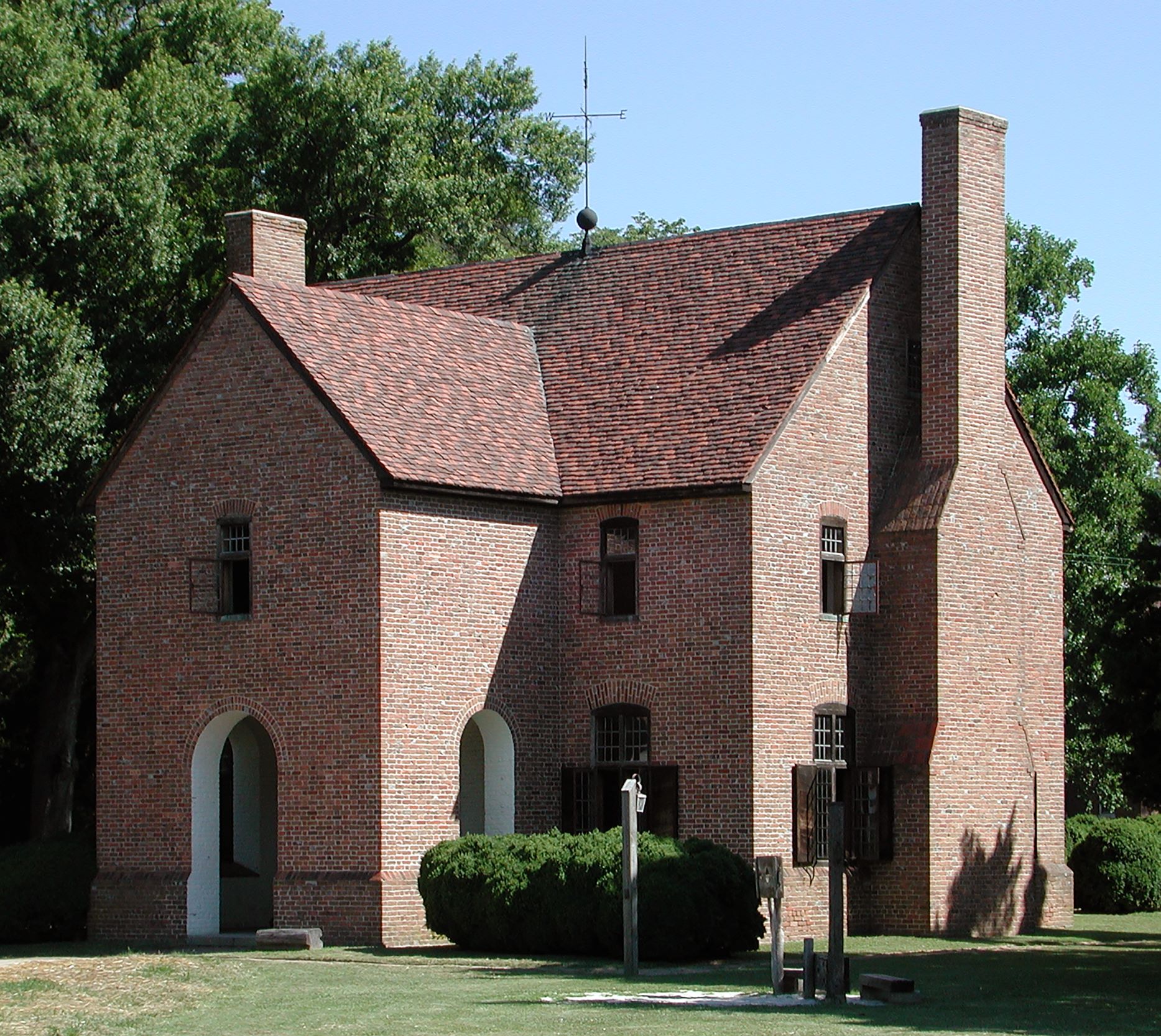
A modern reconstruction of the new Assembly building originally completed in 1676, in Maryland’s seventeenth-century capital city (Historic St. Mary’s City)
A modern reconstruction of the new Assembly building originally completed in 1676, in Maryland’s seventeenth-century capital city (Historic St. Mary’s City)
The uprising in part reflected the growing self-confidence of a native-born Protestant elite who were increasingly going through the process of maturation and creolization that had already played out in other colonies, as testified by the wealth, status, and experience of the men who filled their new Assembly. This is how an older generation of scholarship interpreted the events as part of a whiggish narrative of American democratic maturation. In this sense, the overthrow of the proprietorship represented a rejection of the arbitrary and contingent foundation for the Assembly's existence that Charles I had written into the Calverts' charter, by a group of English colonists now well-versed in the hard-won privileges of Anglophone legislatures.
At the same time, though, the overthrow of the proprietorship was also the culmination of the chaotic politics of anti-Catholicism which the disordered and contingent Assembly had propagated. It created a vacuum of political authority in which English imperial officials were able to finally circumscribe the rights and privileges of the Assembly. By exploiting wartime anti-Catholic and anti-Indigenous sentiment, the newly appointed crown governor Francis Nicholson rallied popular support in the colony and marshal backing from London to push back against the Assembly. He pushed for church establishment, built a new capital city for the colony away from the existing centers of elite power, and introduced a wave of new professional imperial administrators with no prior history in the colony. The Lower House of the Assembly resisted this imperial imposition forcefully, and succeeded in getting Nicholson removed. However, the post-1688 imperial state more broadly held a much stronger hand than the Calvert family ever had, and they rejected efforts to codify the rights of Englishmen in Maryland statues. Through the opening decade of the eighteenth century the Assembly became increasingly dominated by wealthy Protestant planters and they reached a series of accommodations with imperial officials over patronage of key offices and regulations of trade, but in the process they surrendered their radical edge. As one observer noted in 1709, Maryland was ‘the most quiet and easiest Government of the Maine, the freest from all factions and partys.' The Maryland Assembly became just another outlet for the voice of a loyal slave-holding colonial elite in the Protestant British Empire.
The ultimate testament to these seemingly contradictory strains of developments was the radically altered circumstances when proprietary government returned to Maryland in 1715. Benedict Leonard Calvert, 4th Lord Baltimore, had broken with his father and converted his family back to Protestantism, partly in service of his effort to win back the political powers of his family's charter, and his efforts bore fruit in 1715. He died soon afterwards, but the Calvert family had regained their proprietary authority and maintained it until the American Revolution. Questions about colonists' rights and the proprietary prerogative to remodel the government immediately returned. However, the framework in which they were worked out had altered. The Assembly now represented a stable colonial elite and the threat of radical rebellions or breakaway factions was gone. The constitutional struggles of the 1720s and 1730s became characterized by a division between ‘country' and ‘court' parties that were modelled technically and rhetorically on contemporary British politics. The solutions were equally redolent of the contemporary management of the British Parliament. The leading defender of Assembly rights, Daniel Dulany, was bought off by the new proprietor with a slew of patronage positions and generous land grants. Helped by the colony's comparatively narrowly defined boundaries, and therefore its limited space for boisterous backcountry settlement, Maryland's General Assembly settled into a model of patronage and parliamentary management that made it unusually stable and conservative in the lead-up to the American Revolution. Even beyond the events of 1776, Maryland developed one of the more conservative and oligarchical state constitutions in the new United States.
To earlier generations of American historians, the Maryland Assembly had achieved ‘maturity,' on a path to self-government. It is doubtless true that the Assembly had become more professional and regularized in its procedures and jurisdiction. It had done so, however, not by gradual local development of expertise and tireless campaigning for an agreed-upon vision, but through a torturous and chaotic path of crises, stand-offs, and reformulations. That path had explored the true range of seventeenth-century constitutional possibilities for representation in European tradition, from royal absolutism to radical populism, and from liberty of conscience to virulent religious discrimination. Also, as scholars have increasingly recognized, the consolidation of Assembly power and political rights eventually negotiated with imperial officials was actually predicated upon a process of social, economic, and racial stratification and exclusion.
Paul Musselwhite,
Dartmouth College (New Hampshire)
Further Reading:
Archives of Maryland Online: https://msa.maryland.gov/megafile/msa/speccol/sc2900/sc2908/html/index.html
Jordan, David William. Foundations of Representative Government in Maryland, 1632-1715. Cambridge: Cambridge University Press, 1987.
Land, Aubrey C. Colonial Maryland : A History. Millwood, N.Y: KTO Press, 1981.
Musselwhite, Paul. Urban Dreams, Rural Commonwealth : The Rise of Plantation Society in the Chesapeake. Chicago ; The University of Chicago Press, 2019.
Papenfuse, Edward C. A Biographical Dictionary of the Maryland Legislature, 1635-1789. Baltimore: Johns Hopkins University Press, 1979.
Sutto, Antoinette Patricia. Loyal Protestants and Dangerous Papists Maryland and the Politics of Religion in the English Atlantic, 1630-1690. Charlottesville: University of Virginia Press, 2015.