
Jewish Councils in the Polish-Lithuanian Commonwealth
The central institution of Jewish self-government in the Polish-Lithuanian Commonwealth was the Jewish Council, referred to in Hebrew as the vaad. The name Council of the Four Lands (Heb. Vaad Arba Aratsot) was also used, and those lands or provinces were most probably Greater Poland, Lesser Poland, Ruthenia and Volynia. This name was not stable: sometimes the sources refer to three or more than five lands. Initially there was one Jewish Council, and later two separate institutions for the territories of the Kingdom of Poland and the Grand Duchy of Lithuania.
The origins of the Jewish Council in the Polish-Lithuanian Commonwealth are still poorly researched and controversial, due in part to the fact that the institution was not established by privilege or royal document. The theory most commonly accepted by historians links the establishment of the Jewish Council with the introduction of a lump-sum method of collecting the Jewish poll tax (1579-1580), which involved the Commonwealth’s Sejm determining the amount of tax due, leaving it to the Jews themselves to distribute and collect it. Another theory links the origins of the Jewish Council to the rabbinical court, which functioned from the 1520s-30s and was held during the Lublin fairs. The two theories may relate to two different elements of central Jewish representation. One was an assembly of rabbis and scholars concerned with the judiciary and the resolution of legal questions, while the other was an assembly of lay representatives of the provinces, meeting in connection with the need to collect the Jewish poll tax. In the later period, this lay and rabbinical leadership functioned separately.
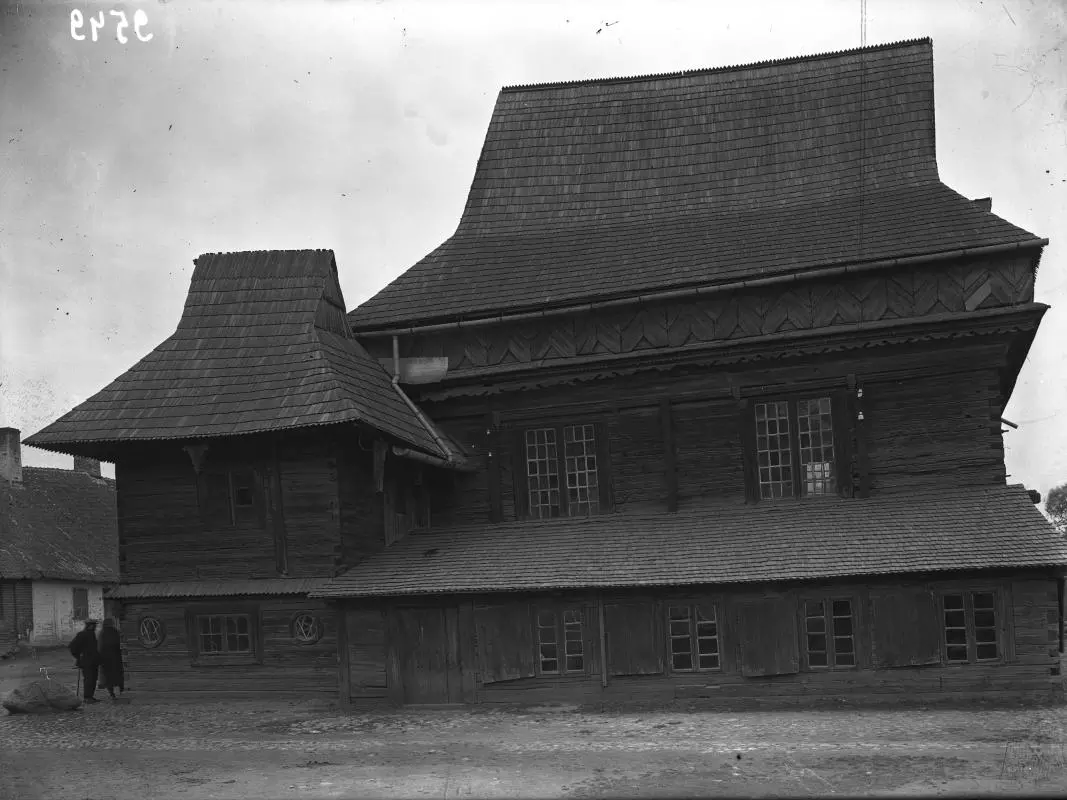
Synagogue in Zabłudów (Podlasie), built in the second quarter of the 17th century. The Jewish council may have convened (or at least prayed) here for their gathering at Zabłudów in 1650, 1664, 1676, and 1687.
The structures of Jewish self-government in Lithuania functioned independently from those of the Kingdom of Poland although they were undoubtedly modelled on them. It can be assumed that the change of borders after the Union of Lublin in 1569 and the incorporation of vast areas of the Grand Duchy of Lithuania into the Kingdom of Poland prompted the Jews of Lithuania to enter into the structures of a single vaad. In 1623, however, the Jews of Lithuania separated from the structures of the Jewish Council and formed their own independently functioning institution. Although the reason for the secession is not stated anywhere in the sources, it can be assumed that the main reason was the dualism of Poland and Lithuania, which had its consequences for the Jews. From 1569 the Commonwealth had a common Sejm, a common foreign policy and a common currency, but separate offices, armies, treasuries and judiciaries. The treasury issues were particularly important here: the Sejm of the Commonwealth set a separate poll tax lump sum for Lithuanian Jews, they were subject to the Lithuanian treasurer and paid taxes to a separate Lithuanian treasury. Conflicts between the borderland Jewish communities of Poland and Lithuania over sovereignty over surrounding communities and settlements probably also contributed to the secession. An example of such a conflict can be seen in the long-standing dispute between Grodno and Tykocin, was examined several times by the tribunal of the Council of the Four Lands, which ruled in favour of the Tykocin community. The final verdict on the dispute, issued in 1621, may have caused the Lithuanian Jews to leave the joint institution. The schism was approved by a privilege issued by King Wladyslaw IV in 1646, allowing Lithuanian Jews to hold their own assemblies.
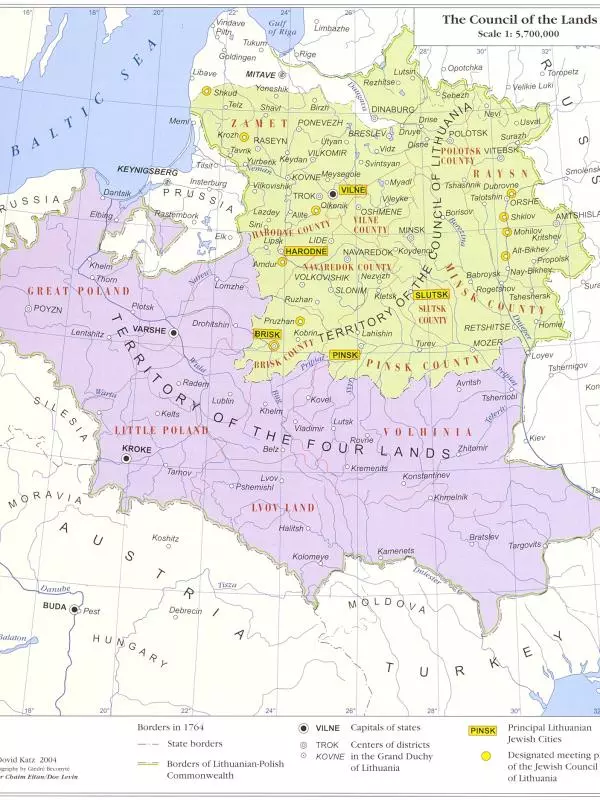
Territories subject to the Council of the Four Lands and the Council of Lithuanian Jews (Dovid Katz, Lithuanian Jewish Culture, 2004, p. 75)
Delegates to the Council of the Polish Jews were sent by the lands (i.e. provinces) and the districts and big communities that had the status of the lands (e.g. Poznań, Kraków, Lublin, Rzeszów, Przemyśl). A disproportion is apparent here: large communities and lands sent several of their representatives at a time, while the other communities were under-represented, and this was reflected in the size of the taxes apportioned. Interestingly, probably following the example of the deputies elected by the nobility to the Commonwealth’s Sejm, the delegates received instructions from the communities that sent them, which they were obliged to follow. The number of delegates sent to the assemblies of the Council of the Four Lands was around 50-70. Little is known about how they were chosen. For the Council of Lithuanian Jews, delegates were sent by the main communities (at first three: Brest, Grodno and Pinsk; eventually their number increased to five, adding Vilnius and Slutsk). In the sources concerning the Lithuanian Council, we find references to ‘small’ assemblies, i.e. those attended by the leaders of the main communities or their delegates, but without the rabbis. Delegates attending received per diems and reimbursement of expenses incurred during business trips from the coffers of the Jewish Councils.
In the early days of the Jewish Council, it seems that the determination of the date, place and mode of convening was an internal matter for the elders. In the eighteenth century, however, the practice of convening Jewish councils by virtue of official summonses (Pol. uniwersały), usually issued by the treasurers, developed, which was a manifestation of the increasing interference of the state authorities in the functioning of Jewish self-governing institutions. However, decrees of non-Jewish authorities defining the powers of the Jewish elders concerning the distribution and collection of the Jewish poll tax provided government endorsement for the functioning of central Jewish self-governing institutions.
The frequency of the Jewish Council meetings was linked to the rhythm of the Sejm of the Commonwealth (the ordinary Sejm theoretically met every two years). Because of the obligation to distribute and collect the Jewish poll tax, the dates of the meetings were set after the end of the general Sejm, when the amount of the agreed lump sum was already known. Hence, there were times when the convocation of the Jewish councils was postponed because the Sejm of the Commonwealth did not take place, such as in 1694 due to the illness of King Jan III Sobieski. In the eighteenth century, the Jewish councils were convened with less frequency, as a result of the introduction of a fixed amount of Jewish poll tax by the Silent Sejm of 1717.
The main gathering places for the Council of the Polish Jews were Lublin (during the fair based around the Feast of Our Lady of Thunder, i.e. 2 February) and Jarosław (during the fair on the Feast of the Assumption of the Blessed Virgin Mary, i.e. 15 August). Gatherings were held during fairs, which were not only trade events but also provided opportunities to conclude various agreements and contracts, and took place at times when it was easier and safer to travel. Gatherings held at that time also did not attract the attention of the townspeople and nobility, who were not always favourably disposed towards the Jews. In the eighteenth century, on the other hand, the Polish council usually took place in smaller towns, owned by noblemen or magnates.
In the case of the Lithuanian Council, the place of assembly was initially Brest-Litovsk, and later the principle of alternation was adopted: assemblies were to be held successively in the districts of the main communities, according to their hierarchy. In the district of the Brest community, the most frequent place of assembly was Sielec, in the Grodno community it was Zabłudów, and in the Pinsk community it was Chomsk. Characteristically, all of them were private towns, where favourable conditions for Jewish councils were guaranteed by the patronage of the magnate owners. It was advantageous to hold Jewish conventions on their estates, which were usually accompanied by fairs or markets, contributing to the revival of the local economy. Within the Kingdom of Poland as well, the magnates made efforts to ensure that the Jewish councils took place on their estates.
Jewish councils had their own officials, the most important of whom was the parnas or senior (elder), referred to in non-Jewish sources as the marshal (Pol. marszałek), apparently by analogy with the function of the marshal of the Chamber of Deputies of the Sejm of the Commonwealth. The official in charge of the council's finances was the trustee (Heb. ne’eman), combining the functions of accountant and cashier, and sometimes tax collector, although separate collectors were usually employed for the latter task. Jewish councils also employed their own scribes and shamesim (functionaries who performed various support tasks often also served as witnesses who signed the documents).
The office of marshal was usually held by an influential land elder or senior of a large community, while the offices of trustees and scribes were usually entrusted to rabbis. These officials constituted the executive of the council, operating between meetings.
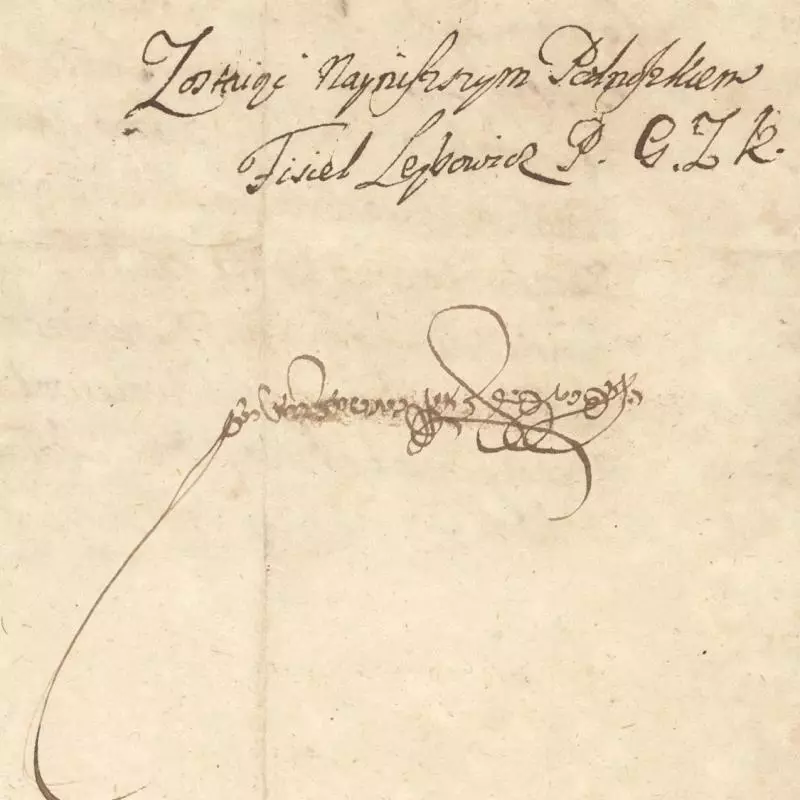
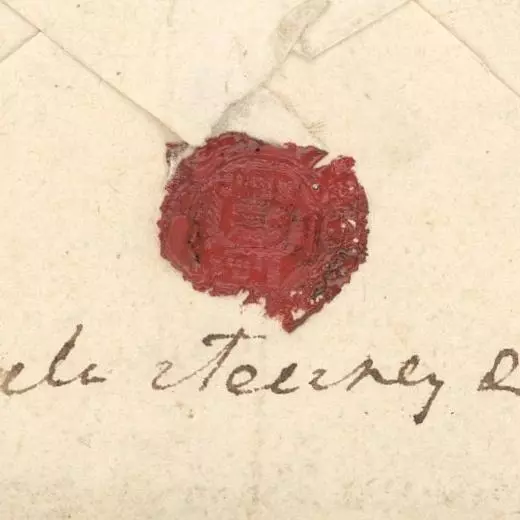
Signature in Latin and Hebrew characters (2a) and seal of the scribe of the Council of the Four Lands, Fiszel Lejbowicz (1718; 2b) (Archiwum Narodowe w Krakowie, Archiwum Dzikowskie Tarnowskich, sygn. 29/639/381, p. 166 and 167)
Important officials of the Jewish councils were shtadlanim, referred to in non-Jewish sources as general syndics, whose task was to represent the interests of the Jews as a whole. This sometimes involved making long journeys. When hiring shtadlanim of the council, attention was paid to the language skills (knowledge of Polish and Latin) and oratory skills of the candidates, as well as their familiarity with the functioning of non-Jewish offices and courts. Of particular importance here were contacts with the magnates and central officials of the Commonwealth: efforts were made to select persons who had the right to reside at the royal court and at the magnate's courts, and who served as factors, suppliers or bankers. Many of the shtadlanim, but also parnasim, scribes and trustees of the Polish council were also royal servants.
Representatives of the Jewish councils actively followed the politics of the Commonwealth, especially the sejmy and local noble assemblies (Pol. sejmiki). Delegates – mainly shtadlanim, trustees and scribes – were regularly sent to the sessions in Warsaw and Grodno. Their task was to lobby (Heb. shtadlanut) for provisions in the parliamentary statutes that were favourable to the Jews and to block unfavourable ones, above all those concerning the increase of the Jewish poll tax or the introduction of additional burdens. Undertaking such activities and winning the goodwill of the decision-makers entailed very large expenses, but these were usually considered to be shared and covered by the coffers of the Jewish councils.
Both Jewish councils kept their manuscript entry books (Heb. pinkas). These contained Hebrew translations of the decisions, since – as can be assumed – the sessions were held in Yiddish and the scribes made their notes in that language. Hebrew, on the other hand, was considered the appropriate language for the keeping of books and records, as a result of the perception of Jewish self-government institutions as a tool for the implementation of Jewish religious law.
The pinkas containing the resolutions of the Council of the Four Lands was probably destroyed back in the eighteenth century. A tremendous effort to reconstruct its contents on the basis of surviving fragments and scattered copies was made in the interwar period by Israel Halperin (Pinkas vaad arba aratsot, ed. Israel Halperin, Yerushalayim 1945), and the materials he collected were later supplemented by Israel Bartal (Pinkas vaad arba aratsot, ed. Israel Halperin, Yerushalayim 1945. Second supplemented edition: Israel Bartal, Yerushalayim 1990). The situation is different in the case of the Council of Lithuanian Jews. Pinkasim with the resolutions of the council were kept in each main community and Szymon Dubnow based his edition (Pinkas ha-medinah o pinkas vaad ha-kehilot ha-rashiyot be-medinat Lita, ed. Simon Dubnow, Berlin 1925) on copies of these – which no longer exist today.
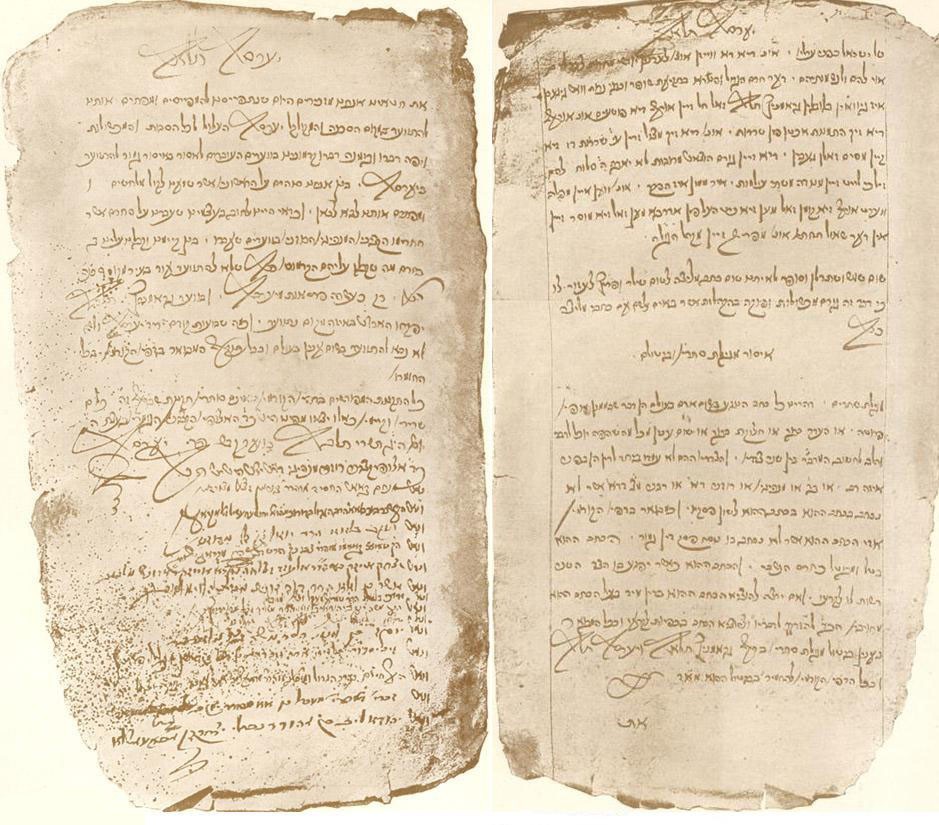
Pages from the pinkas of the Council of the Four Lands (Jarosław, 1671)
There were tribunals attached to both Jewish councils, which acted as rabbinical courts and formulated legal interpretations. The tribunals consisted of rabbis of the lands and main communities, yeshiva (academy of Talmudic learning) rectors and scholars, as well as lay leaders. The tribunals acted as a court of appeal (a verdict of a court of communal authorities could be appealed to them) and as a court of first instance, adjudicating disputes between communities, communities and districts, and between an individual and a community. The tribunals of the councils also granted permission (Heb. haskama), to print or import books, which meant the right to distribute and use them in yeshivas, for example. They also ruled on issues of religious orthodoxy, as exemplified by the case of the accusation of favouring Shabbetaism made by Jacob Emden against Jonathan Eibenschütz, rabbi of Altona, Wandsbeck and Hamburg, in which both councils defended the latter (1751, 1753).
Officially, Jewish councils were convened to distribute taxes among the lands and communities; in practice, however, their activities extended to all areas of Jewish social life. As a result, the regulations of the councils were sometimes very detailed. Despite their normative nature they are an excellent source showing the realities of everyday life. Several areas can be identified that were particularly subject to regulation: the functioning of the communities and relations between them, Jewish religious and social life, economic and fiscal matters and contacts with non-Jews.
Although, in general, the Jewish councils did not interfere in the internal functioning of the communities, they issued orders in conflict situations, determining the rules for the election of authorities, the collection of taxes or the staffing of the rabbinate. A great deal of space in the legislation of the councils was taken up by the promotion of education and study, the importation of books, the protection of widows and orphans and charity. The latter also included activities of a broader, supra-regional dimension, namely the redemption of Jewish captives and support for the poor in the Land of Israel, which served a unique function in cementing the supra-regional unity of Jewish communities and enabling the experience of belonging to a broader Jewish community. The ordinances of the councils also dealt with the observance of the Sabbath when operating in a non-Jewish environment and the control of kosher food. The councils also issued anti-luxury ordinances, limiting spending on luxurious clothes and sumptuous feasts, which was intended both to counteract the impoverishment of taxpayers and to prevent hostility from non-Jews.
An important sphere of the legislation of the councils pertained to economic matters. These included the leasing of taxes and landed estates and competition between Jews themselves for leases, the conduct of trade, the production and exchange of coin, and credit activities. The councils required communal authorities to exercise particular scrutiny over activities that could lead to incurring obligations or debts and borrowing money, especially from non-Jewish creditors. This special caution was due to the application of the principle of collective responsibility to Jews, where communities were responsible for their members, and abuses and crimes committed by individuals could jeopardise the security of the entire society. Regulations also applied to the drafting of bills of exchange, the payment of debts and the declaration of bankruptcy, especially the prosecution of false bankrupts, destabilising the conduct of business.
The ordinances of the councils attempted to reduce the risk of conflict with non-Jews by, among other things, placing restrictions on the employment of Christian servants in Jewish homes, regulating peddling and the incurring of debts from non-Jews. They dealt with forgers of documents and bonds, fencing and people who caused quarrels with non-Jews as a threat to the entire community. The councils also directed that measures be taken to guard against invasions of Jewish neighbourhoods and attacks by non-Jews, and to deal with occasions when when accusations of ritual murder, prsofanation of the host, blasphemy and witchcraft were made against Jews. The prosecution of non-Jews who murdered Jews was seen as particularly important here, so that they would not go unpunished. The councils also supported efforts to reclaim Jewish converts.
Contacts between the representatives of the two councils, the Polish and the Lithuanian ones, were regular, and opportunities to do so were provided, for example, by joint activities at the royal court or the Sejm. The Lublin and Jarosław fairs were also regular meeting places, during which the Council of the Four Lands convened, when the Polish and Lithuanian leaders collated accounts and made decisions.
The disputes between the two councils were settled by a tribunal composed equally of Polish and Lithuanian rabbis, usually sitting in Łęczna. Mostly, these disputes were of a financial nature and concerned the division of expenses incurred in various interventions, e.g. to dismiss accusations made against Jews, as well as expenses for gifts given to the king and magnates.
There are known cases of interventions of the Jewish councils, especially of the Polish council, outside the borders of the Polish-Lithuanian Commonwealth. These concerned conflicts between communities or between factions within one community (Frankfurt am Main, Hamburg, Amsterdam, Jerusalem), theological-ideological disputes of a personal nature (e.g. the aforementioned dispute between Eibenschütz and Emden) and disputes of an economic nature (e.g. the dispute between Jewish printers in Amsterdam and Sulzbach). With these types of interventions, the councils played the role of an external authority, involved at the request of one of the conflicting parties, although his proposed solutions were not always taken into account, which may suggest that his moral authority was not always sufficient.
Another type of foreign intervention of the Jewish lands or Jewish councils were the efforts made from the seventeenth century onwards to obtain from the municipal authorities, and later also from King Frederick II of Prussia, permission for Jews from the Commonwealth to stay in Wrocław during the local fairs and for them to maintain houses of prayer and kosher eateries in the city. Another initiative was the sending of envoys to Rome in the mid-eighteenth century (1754, 1758, 1761) to seek protection from the pope from accusations of ritual murder against the Jews in response to several trials that had taken place in the preceding years and had reverberated in the Commonwealth.
In 1764, the Convocation Sejm banned Jewish assemblies, both at the provincial and the central level. This was linked to wider administrative and fiscal reforms, which saw the abolition of the lump-sum Jewish poll tax system and the introduction of a direct taxation system for the Jewish population based on a census. The reforms were mainly due to the growing indebtedness of the Jewish councils, as well as of the individual communities, so that they were no longer perceived as guarantors of payment. The decision to abolish the Jewish councils was taken during the interregnum, when the Jews could not count on the monarch's protection.
Interestingly, very few Jewish sources of the time refer to the dissolution of the Jewish councils. Often quoted is the opinion of the diarist Ber of Bolechów (1723-1805), personally involved in the activities of the Polish Council, who describes its dissolution as a humiliation of the Jewish people and a deprivation of the honour to which they had been entitled for centuries. It can be assumed, however, that many smaller communities and settlements, which did not have proportional representation in the structures of the councils and were overtaxed, met the abolition of the councils with mixed feelings, related to the hope of a more equitable distribution of dues.
In the historiography, the assessment of the Jewish councils varies greatly. One can find critical assessments of them, above all related to their activities in censoring books, restricting the activities of printing houses, the promotion of the Sephardic system of religious law enshrined in the Shulchan Aruch code and the fight against religious ‘innovations’. Mostly, however, scholars draw an apologetic picture and emphasize the uniqueness of the Jewish councils and their beneficial impact on the general situation of the Jews in the state and on the development of various areas of Jewish life, as well as the elaborate and permanent character of this institution, not found on such a scale in other areas of the Ashkenazi diaspora.
Finally, it is worth emphasising that the Jewish councils constituted a central representation of the Jewish population, which was a group with a separate legal status in the Polish-Lithuanian Commonwealth. This legal separateness was further strengthened by religious separateness. The Jewish councils, however, were not only religious assemblies, but decided on the distribution and collection of Jewish poll-tax and passed laws regulating all areas of Jewish society. As such, they enjoyed the support of the non-Jewish authorities of the Commonwealth, for whom they were the guarantor of tax collection and control over the Jewish population.
Anna Michałowska-Mycielska, University of Warsaw.
Further Reading
Secondary literature:
Ettinger Shmul, The Council of the Four Lands, in A. Polonsky, J. Basista, and A. Link-Lenczowski (eds.), The Jews in Old Poland, 1000-1795, London-New York 1993, pp. 93-109.
Goldberg Jacob, The Jewish Sejm: Its Origins and Functions, in A. Polonsky, J. Basista, and A. Link-Lenczowski (eds.), The Jews in Old Poland, 1000-1795, London-New York 1993, pp.147-165.
Michałowska-Mycielska Anna, The Council of Lithuanian Jews, 1623-1764, Warszawa 2016.
Rosman Moshe, The Authority of the Council of Four Lands outside Poland-Lithuania, “Polin. Studies in Polish Jewry” 22 (2010), eds. A. Teller, M. Teter, A. Polonsky, pp. 83-108.
Teller Adam, Rabbis without a Function? The Polish Rabbinate and the Council of Four Lands in the Sixteenth to Eighteenth Centuries, in J. Wertheimer (ed.), Jewish Religious Leadership. Image and Reality, Vol. 1, New York 2004, pp. 371-400.
Edited source collections:
Pinkas ha-medinah o pinkas vaad ha-kehilot ha-rashiyot be-medinat Lita, ed. Simon Dubnow, Berlin 1925.
Pinkas vaad arba aratsot, ed. Israel Halperin, Yerushalayim 1945 (Second supplemented edition: Israel Bartal, Yerushalayim 1990).
Sejm Czterech Ziem. Źródła, eds. Jakub Goldberg and Adam Kaźmierczyk, Warszawa 2011.