
The Assembly of Friuli
The region at the north end of the Adriatic Sea, called in the Middle Ages the Patrie dal Friûl, derived its identity from the ecclesiastical jurisdiction of the Patriarch (Archbishop) of Aquileia, who after 1077 also held temporal authority granted by the Holy Roman Emperor Henry IV. The patriarchs extended their political control to Trieste, parts of Austria, much of what is now Slovenia, and central Istria, now in Croatia. The expanding commercial empire of the Republic of Venice, which took advantage of factional strife in Friuli, conquered the patriarchate in 1420, but the local political structures of Friuli survived, including the medieval assembly of estates. The Venetian governor, in fact, bore the contingent title of Luogotenente (locum tenens) and took over the non-ecclesiastical duties of the patriarch. In 1433 Emperor Sigismund ceded to Venice the imperial fief of Friuli, and all the future patriarchs were Venetians who accepted the permanent loss of the temporal jurisdiction of the patriarchate. As a result by the late fifteenth century, the medieval political structures of Friuli remained under Venetian control despite recurrent attempts from north of the Alps to regain the lost imperial fief.
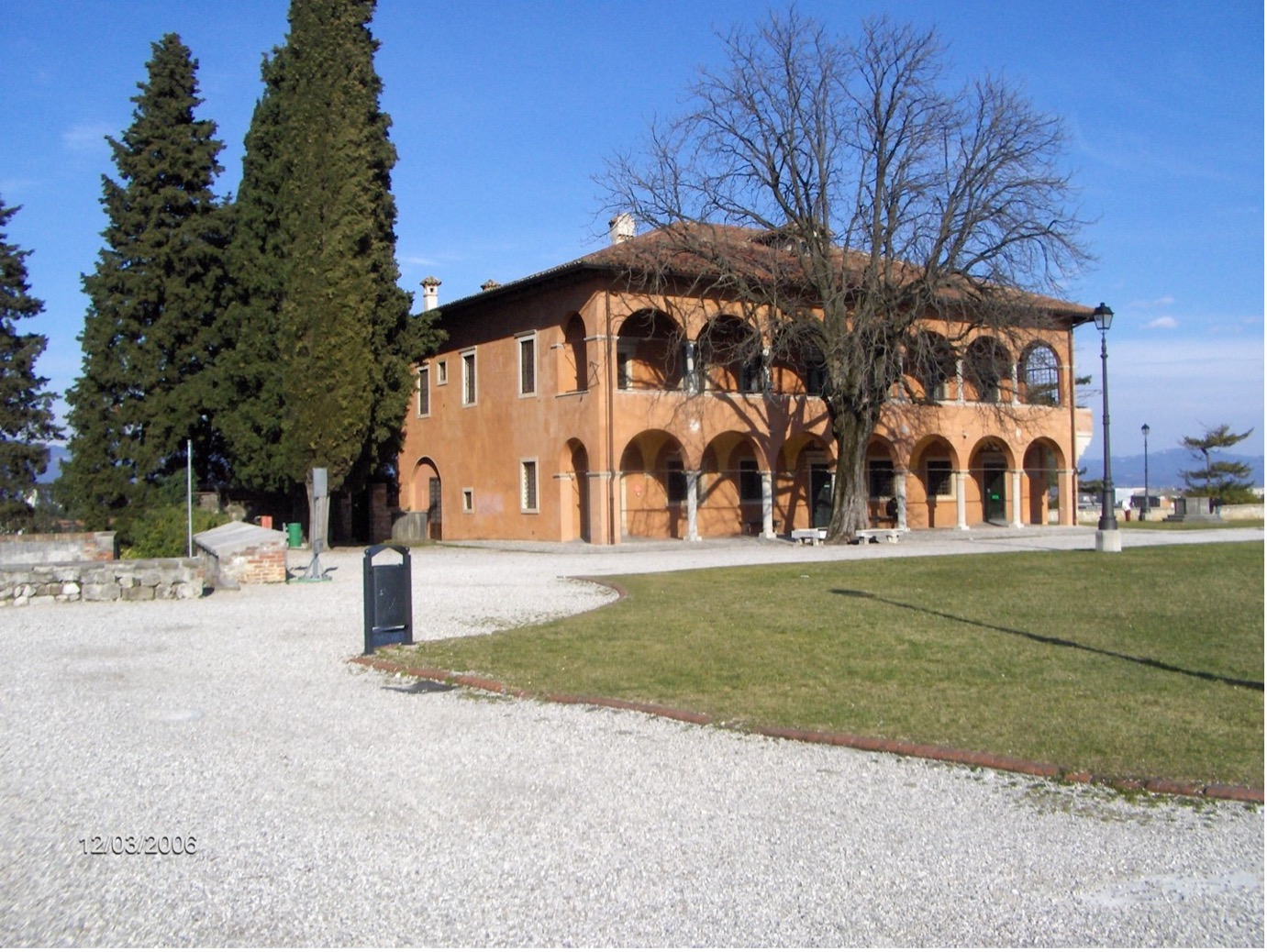
The meeting hall of the Contadinanza, the fourth estate of the assembly of Friuli, Udine.
The meeting hall of the Contadinanza, the fourth estate of the assembly of Friuli, Udine.
Meeting between 1231 and 1805, the assembly served as a consultative body, first to the patriarch and then to the Venetian Luogotenente. It also had legislative and judicial functions, but Venice severely curtailed its political autonomy. At first the assembly consisted of two estates, the clergy and the nobility, but by 1282 representatives of the towns had been added, so that henceforth it acted on behalf of the whole population of Friuli (“nomine totius universitatis Foriiulii”). The assembly met regularly under the patriarchs, but sub-committees, elected by the estates and the patriarch's personal appointees, conducted most of its business. During the history of medieval and early modern Friuli, the recurring political threat to orderly government both within and without the assembly came from the feudal nobility, the so-called castellans, whose influence the patriarchs counterbalanced by appointing to the towns their own representatives, the gastaldi, who in turn selected the third estate members in the assembly.
During the Italian wars of the early sixteenth century, feuding castellan families and discontented peasants engaged in a bloody civil war, which reached its peak in 1511 during an invasion from the Empire which gained the allegiance most of the castellans. The peasants, in contrast, sided with Venice fearing that an imperial victory would have allowed the castellans to re-establish feudal duties and corvée labor obligations. In compensation for the peasants' loyalty, Venice promulgated between 1537 and 1541 a series of laws that created in the assembly a fourth estate, the Contadinanza, which sat with the clergy, nobles, and townsmen. The peasants' elected representatives could propose laws to the assembly and even veto those offered by the other estates. The assembly survived until Napoleon snuffed it out, making it one of the longest surviving assemblies in Europe and one of the very few that granted representation to the peasantry. Although during the Patriarchate the assembly was itinerant, once the Venetians took power, it always met in the castle of Udine.
The functions of the assembly included territorial defense. Each representative in the assembly was personally obliged to provide head money, the talea militiae, when required. The head tax prescribed a defined number of crossbowmen and men at arms. The assembly also established militias of foot soldiers, the cernide. Based on the model of the ancient Roman Republic, every ‘borough' was divided into ‘‘tenths',' each consisting of ten men at arms, who would contribute one or more of their number to the militia when necessary. For their part, the towns had to produce one foot soldier for every hearth. By the early sixteenth century, when the military revolution of field artillery and mercenary companies dominated Italian warfare, the undisciplined, poorly drilled cernide declined in importance. They performed miserably in open combat and were relegated to manning town walls and digging defensive ditches.
Besides military functions, the assembly set tax policy and provided personnel for public administration. Most notable, however, was the codification of laws under the auspices of the assembly, which had original jurisdiction over disputes rooted in feudal law. The assembly served as the final court of appeal in civil and criminal cases. The Constitutiones Patriae Foriiulii of 1355 codified Friulan law, a constitution the Venetians later confirmed, and which remained in effect until the Napoleonic era.
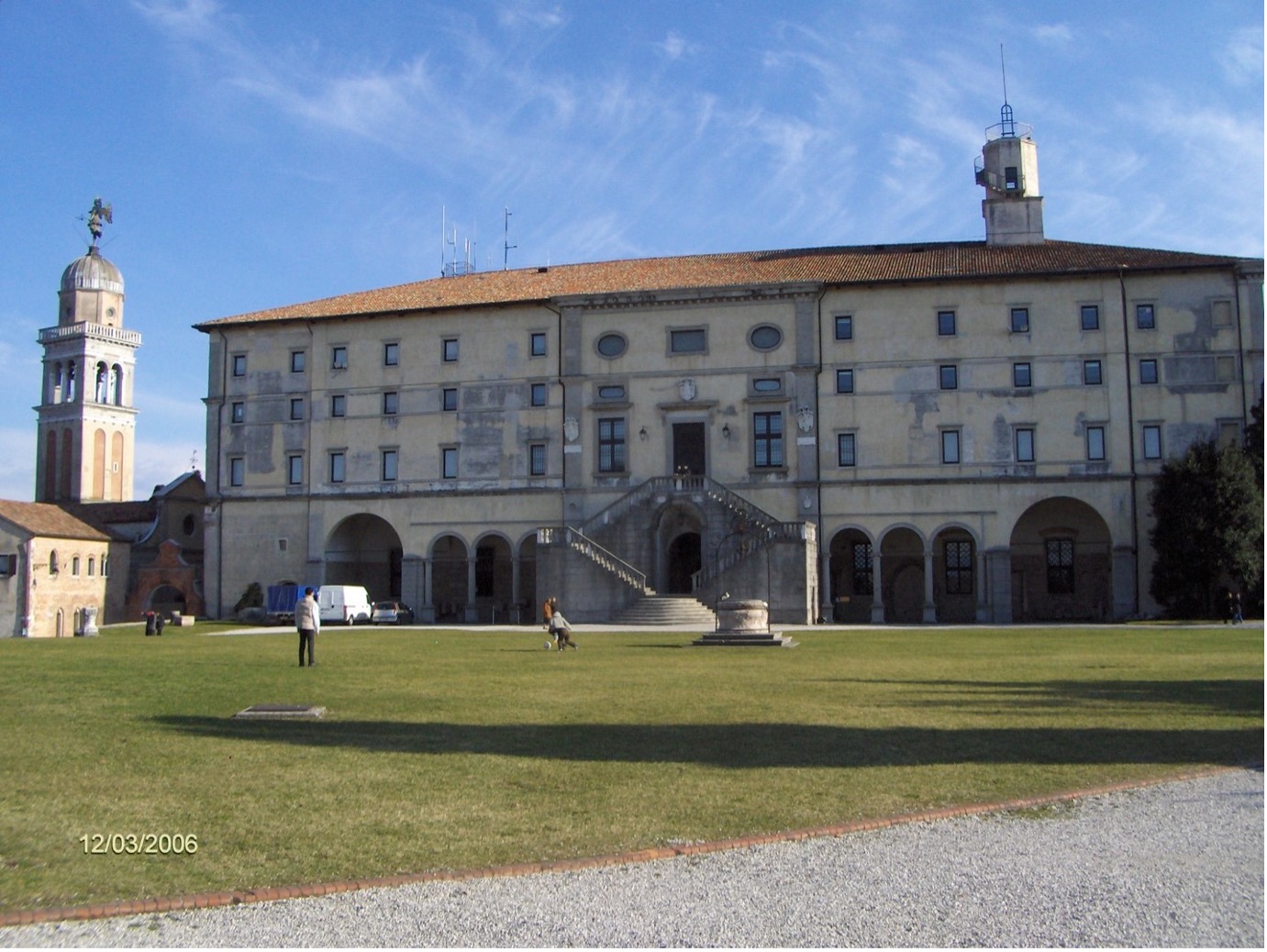
The castle of Udine, meeting place of the assembly of Friuli.
The castle of Udine, meeting place of the assembly of Friuli.
The assembly of Friuli embodied many of the contradictions and inefficiencies characteristic of the political structures of the Ancien Régime and was ever resistant to reform. After the Venetian conquest, Friuli lacked a clear hierarchy of authority, a problem rooted in the awkward fit of an electoral republic sitting atop a feudal society. Venice was governed by patricians who were elected to short-term offices as local governors, judges, and military captains, which meant that although the Luogotenente had overall responsibility for the affairs of the region, he could not force other officials, such as the Venetian rectors of towns, to do his bidding because they too were fellow patricians elected to their posts. The Venetians returned home after a posting of a few months or a year to seek support from their fellow patricians to obtain a new, and (they hoped) more prestigious and lucrative posting. Venetian magistrates were rank amateurs, utterly without legal training or local knowledge, which made the task of the Venetian Republic ruling feudal Friuli even more difficult. The oblivious attitude of the Venetians toward Friuli was notorious, exemplified by the Venetian magistrate who summarized his service there by writing that Friulans were dirty by nature. In 1566, the Friulan noble and military engineer Giulio Savorgnan tried to remedy the situation by commissioning a series of maps to alleviate the ignorance of the Venetian masters.
The assembly survived as a fragment of the old order, especially as an arena for the castellans to bind up Venetian influence in legal red tape. As one Luogotenente wrote, Venice had merely added new institutions without eliminating the old ones, making Venetian rule even less efficient than that of the patriarchs. Many of the Venetian office-holders treated their positions as an opportunity for graft, but the short terms of office anyway meant that few could cultivate a sophisticated knowledge of the subject society, its problems, and its peoples.
Among these conflicting institutions and offices, both Friulan and Venetian, only the assembly encompassed all of Friuli. The Luogotenente sat in on the sessions where he orchestrated decisions favorable to Venetian interests. Although Venice had promised the Friulan castellans that it would honor their ‘liberties, rights, and customs' (libertates, iura et consuetudines), it habitually sided with the cities, especially Udine, eroding castellan power. Although Udine and the peasants had forged an alliance against the castellans during the civil wars of the first decades of the sixteenth century, famine and epidemics among livestock pushed apart the city and the peasants with their conflicting financial interests of cheap food for the city and decent prices for the peasants. In the inflationary climate of the late sixteenth century, fiscal demands ate up as much as thirty percent of the agricultural yield. Faced with starvation, peasants in the tens of thousands migrated to German towns or Venice, where entire neighborhoods filled up with Friulan refugees. By the turn of the century, one Venetian official estimated that during the previous thirty years, the population of Friuli had declined by half. The demographic catastrophe ate away at the relative significance of Friuli and Venice in comparison to northern Europe, especially the United Provinces and England, which during the seventeenth century began to outstrip the economic power of the Mediterranean and to strengthen their own representative institutions.
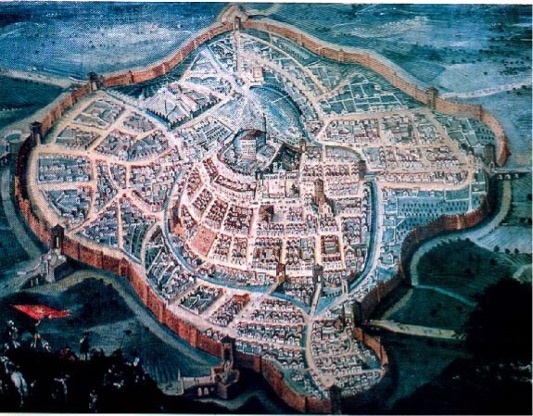
View of Udine, 1652 attributed to Joseph Heintz il Giovane, Civici musei del Castello, Udine.
View of Udine, 1652 attributed to Joseph Heintz il Giovane, Civici musei del Castello, Udine.
In Friulan culture, the assembly at one time served as a sign of distinction, one that enabled Girolamo di Porcia in the sixteenth century to declare medieval Friuli more of a republic than a principality, but by the eighteenth century, it also became a marker of backwardness, even decadence. In his great novel about the Risorgimento, Confessions of an Italian, Ippolito Nievo described the arrogant nobles of the Friulan assembly as utterly ignorant, barely able to read the laws they themselves had passed. The aristocratic narrator in the novel, who regretted that he had never bothered to attend a session of the assembly, snidely remarked that ‘it must have been a wonderful spectacle' because none of the members could speak Italian, a fact made ‘evident from their decrees and deliberations, where following a brief salvo in Latin, a mixture of Italian, Friulian and Venetian comes forth that is not without charm for those who enjoy a laugh.' Nievo explained that however inept the phrasing of the assembly's laws, their content had been carefully worked out in advance with the Luogotenente. An independent legislative body, it was no longer. Although long lived, the Friulan assembly faded into mediocre oblivion by the eighteenth century, its gaudy pretensions a poor mask for the reality that it had become a shabby joke.
Northwestern University
Further reading:
Amaseo, Leonardo; Amaseo, Gregorio; and Azio, Giovanni Antonio. Diarii udinesi dell'1508 al 1541. Edited by Antonio Ceruti. Monumenti storici publicati dalla R. Deputazione Veneta di Storia Patria, ser. 3, vol. 2, Cronache e diarii, vol 1. Venice, 1884.
Leggi per la Patria e Contadinanza del Friuli. Udine, 1686.
Relazioni dei rettori veneti in terraferma. Vol. 1, La Patria del Friuli (Luogotenenza di Udine). Vol. 5: Provveditorato di Cividale del Friuli, Provveditorato di Marano. Milan, 1973, 1976.
Sanuto, Marino [Sanudo, Marin]. I diarii. Edited by Rinaldo Fulin et al. 58 vols. Venice, 1879-1903.
Gottardi, Michele. “La struttura politico-amministrativa del Friuli occidentale nel XVI.” In Società e cultura del Cinquecento nel Friuli occidentale: Studi, edited by Andrea Del Col. 75-103. Pordenone, 1984.
Koenigsberger, Helmut Georg. "The Italian Parliaments from their Origins to the End of the 18th Century,” in Politicians and Virtuosi: Essays on Early Modern History (London, 1986), 27–62 [originally published in The Journal of Italian History 1, 1 (1978), 18–49].
Leicht, Pier Silverio. Parlamento Friulano. 2 vols. Bologna, 1917, 1925.
Menis, Gian Carlo. History of Friuli, Pordenone, 1988
Muir, Edward. Mad Blood Stirring: Vendetta and Factions in Fruli during the Renaissance. Baltimore, 1993.
Paschini, Pio. Storia del Friuli. Udine, 1975.
Stefanutti, Andreina. “Udine e le contadinanza: Solidarietà e tensioni sociali nel Friuli del ‘500 e ‘600.” In Udin: mil agn tal cûr dal Friûl, edited by Gian Carlo Menis, 111-17. Udine, 1983.
Tagliaferri, Amelio. “Ordinamento amministrativo dello stato di terraferma.” In Atti del Convegno: Venezia e la terraferma attraverso le relazioni dei rettori, Trieste, 23-24 ottobre 1980, edited by Amelio Tagliaferri, 15-43. Milan, 1981.