‘Early modern parliamentary studies: Overview and new perspectives’ is published
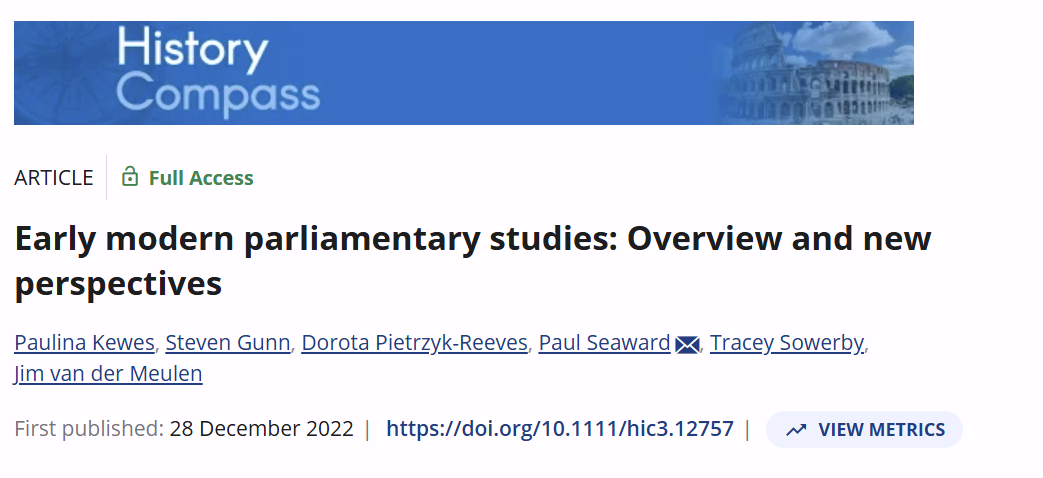
The first article from the project has been published in History Compass. Our project team co-authored a call for a new approach to representative assemblies of early modern Europe and beyond. In it, we call for scholars to go beyond the vast national historiographies on legal constitutional structure of early modern assemblies and instead focus more on the cultural and transnational dimension of such bodies, a phenomenon we describe as ‘parliamentary culture’. Drawing on the existing historiography, we highlight the potential of applying new methods to these well studied bodies. In particular we advocate for an interdisciplinary and collaborative agenda.
Our article makes the case for the benefits that can be gained from an investigation of the culture surrounding early modern representative assemblies. Parliamentary culture influenced and shaped political behaviour (and was shaped by it in return) and structured parliamentary business. How the assemblies were embedded into the thought of their time and period, how transnational knowledge of these bodies was shared, and their place as part of a set of common European traditions of political negotiation and consent all reveal new dimensions of the assemblies and their place in the early modern world.
We suggest that this new approach that might lead beyond Europe too, into some of its colonies, where Europeans also encountered other traditions of negotiated discussion and agreement.
Early modern parliamentary studies: Overview and new perspectives
Paulina Kewes, Steven Gunn, Dorota Pietrzyk-Reeves, Paul Seaward, Tracey Sowerby, Jim van der Meulen
First published: 28 December 2022